Showing posts with label Music. Show all posts

April 11, 2013

Spice Up Your Life...

 
More or less essential spices for Mediterranean cooking...

Allspice: A single spice that imparts the warm flavor and rich aroma of cinnamon, cloves and nutmeg, allspice is also known in Mediterranean cooking as myrtle pepper. (It's a member of the myrtle family.) You'll find it whole and ground in recipes for seafood, poultry and meat marinades, as well as in rice dishes and desserts -- like cakes, pies, and puddings. It's also often used in tandem with other spices, especially on vegetables and in stews and stuffings.
  
Anise Seed: The warm, sweet, licorice-like taste of anise seed is used to flavor both sweet and savory dishes. In Mediterranean cooking you'll find it in seafood recipes, dried fruit and nut mixtures, breads (like biscotti), and desserts.

Annatto Seed: Annatto seed adds a warm, sweet, peppery flavor and a lovely orange color to grains, seafood, vegetables, meats, stews, sauces, and legumes. It's often used in combination with other spices. You'll also find it referred to as roucou, lipstick tree, bija, and achiote.

Basil: A staple in southern France and Italy, you'll find the sweet yet peppery taste of basil in a wide variety of dishes -- as the basis for pesto and often in tandem with tomatoes, in pasta sauces, Italian minestrone, salads and dressings, breads and marinades. It's an extremely versatile herb from the mint family. Basil blends well with other herbs and spices -- such as parsley, rosemary, oregano, thyme, sage, and saffron.

Bay Leaves: Bay originates in the Mediterranean area, where in ancient times it was a symbol of achievement. Potently flavored, just a leaf or two of bay will usually suffice in soups, broths, stews, sauces and marinades for meats and poultry. It's even found in an occasional dessert.

Caraway Seeds, Black: The peppery taste of black caraway (nigella seed) is enjoyed on flat breads and with lentils and vegetables and in spice blends and pickles. No relation to true caraway seeds, these are produced by a flower that belongs to the buttercup family and is indigenous to the Mediterranean. The seed has long been valued for its healing properties.

Cardamom: Mediterranean cooks crush the pods to release the warm flavor and aroma of this spicy, sharp, and sweet seasoning. Native to India and a member of the ginger family, it's used in both sweet and savory recipes -- from beverages and delicate desserts to meat and vegetable dishes.

Chervil: Chervil is used by French and Spanish cooks much like parsley, though it imparts a delicate anise taste as well as an herbal one. You'll find its distinctive, delicate flavoring in recipes for seafood, pasta, grain, vegetable and egg dishes, and in salads, sauces, soups, and dressings. A key ingredient in French potato soups, chervil also appears in blends like Fines Herbs.

Chili peppers: Red chili peppers are ground and used as a table condiment (cayenne) or made into a paste. Mediterranean cooks also sprinkle them in sauces, stews, and seafood dishes. The heat of the spice comes from the capsaicin content, which varies; all chili peppers belong to the genus capsicum, which includes over 20 different species.

Chives: Chives belong to the onion family but have a milder, more delicate flavor than onions. They are rich in vitamins A and C and complement salads and dressings, yogurt, egg, and pasta dishes, casseroles, baked potatoes, soups and sauces. Chives also appear in recipes for Fines Herbs blends.

Cilantro: A strongly aromatic seasoning found in many cuisines around the world, cilantro has roots in both Southern Europe and the Middle/Far East. The leaf of the coriander plant, it has a pungent flavor reminiscent of sage and lemon. You'll find it seasoning Mediterranean stews, soups, curries, vegetables, salads, relishes and tomato-based sauces.

Cinnamon: Fragrant with a slightly sweet taste, cinnamon adds a warm spiciness to Mediterranean soups, condiments, glazes, desserts, and drinks. It complements fruits like apricots and apples as well as meats and vegetables like carrots, spinach, and onions. Cinnamon often appears in Mediterranean cuisine in combination with other warm spices, like cloves, nutmeg, cardamom, ginger, allspice and pepper.

Cloves: The warm, rich, spicy flavor and strong, sweet aroma of cloves is used to accent Mediterranean baked goods, stews, soups, and meats. It's often used in tandem with cinnamon, ginger, and nutmeg. Of Southeast Asian origin, the spice is the unopened flower bud of the evergreen clove tree.

Coriander: With a taste and aroma that's distinct from fresh cilantro leaves (which come from the same plant), coriander is often used to flavor Mediterranean meat, poultry, and vegetable dishes as well as cookies and cakes. Its scent is a bit like orange, its taste warm and sweet.

Cumin: Cumin is a vital spice around the world. Mediterranean cooks toast the seeds whole and then grind them for use in stews and with couscous. It's often paired with coriander as well as hot spices. Good quality cumin will hold its flavor and aroma in long-simmering dishes. You'll find it in recipes for seafood, egg, poultry and meats, as well as tomato-based sauces and salad dressings.

Fennel: Mediterranean cooks often toast fennel seeds and serve them with seafood. You'll also find their sweet, mild licorice taste in meat, vegetable, and grain dishes, soups, tomato sauces, cakes, pastries, breads, beverages, salads and dressings (especially French vinaigrettes).

Fenugreek: The nutty, spicy-sweet, maple-like flavor of fenugreek is found in both Mediterranean and West Asian cuisine. It's often used -- whole or ground -- in curries, pickles, breads, teas, and desserts. Use it sparingly, because too much can make a dish bitter.

Garlic: A mainstay in Mediterranean cuisine, garlic is a versatile seasoning that complements most any savory dish. Of central Asian origin, it's a member of the lily family and comes in many varieties, including white-, pink- and purple-skinned cloves. You'll find garlic in Mediterranean sauces, stews, soups, salad dressings, casseroles, breads, and grain dishes.

Ginger: Mediterranean cooks use ginger to enhance both sweet and savory dishes. Warm and spicy sweet, aromatic and zingy, ginger is added to stir fries, sauces, cakes and cookies, puddings, and -- because it combines well with many other seasonings -- spice blends.

Juniper Berries: The fruit of a small evergreen shrub, this aromatic and spicy/sweet seasoning is used for meats (marinades, roasts, stews, and in sausage mixes), pickles, soups, and vegetable dishes. Mediterranean cooks crush the berries to fully release the flavor.

Mace: This red, lacy covering of the nutmeg fruit is used in dessert and savory dishes to impart a warm, sweet, cinnamon/pepper flavor. You'll find it in Mediterranean recipes for soups, sauces, stuffings, puddings, and baked goods.

Marjoram: A relative of oregano with a lighter, more delicate flavor, marjoram is used liberally by Italian, French, and Greek cooks. Native to the Mediterranean region, it has a sweet, minty flavor that works well with many vegetables, meats and poultry and in recipes for soups, stews, butters, sauces, and salad dressings. It's also a key ingredient in spice blends such as Fines Herbs.

Mint: Used in eastern Mediterranean cooking, peppermint and spearmint provide a fresh flavor in a variety of sweet and savory dishes. Peppermint's strong aroma and taste is often used to flavor candy and desserts, and spearmint is often found in teas, sauces, and jellies that are served with meat, as well as vegetables, like potatoes and carrots. Mint is also added to salads, stews, soups and stuffings.

Nutmeg: Mediterranean cooks grate whole nutmeg for a strong, cinnamon/nutty flavor in sweets and savories. You'll find it in recipes for pies, cookies, cakes, fruit dishes, sauces, soups, seafood, poultry, beans, eggs, cheeses, and vegetables (especially eggplant, spinach, and cabbage). Italian cooks in particular use nutmeg for its rich scent and flavor in ravioli and tortellini dishes, meat sauces and stews.

Onion: Onion's distinct taste is indispensable in Mediterranean cuisine, where it enhances other vegetables, soups, sauces, seafood and meat dishes, grains and legumes. There are hundreds of varieties -- including the large, round Spanish onion, the red-skinned Italian onion, smaller, yellow or white onions, pearl onions and green onions --  all of which vary in appearance and potency.

Oregano: Oregano grows wild throughout the Mediterranean, where it's a cooking staple. Though related to marjoram, its flavor is stronger. You'll find it in French, Greek and Italian dishes, especially in tomato-based recipes. Mediterranean oregano is also used to marinate meats and seafood before grilling and to season olives, cheeses, vegetables (especially eggplant), egg dishes, grains, breads, casseroles, meats, poultry, and salads. It partners well with other spices, like basil, garlic, thyme, and parsley.

Paprika: This vibrantly colored spice has a mildly peppery/sweet taste that complements eggs, poultry, stews, soups, dressings, seafood, and vegetables. It can be substituted for Aleppo pepper (use three parts ground Hungarian paprika and one part ground red pepper flakes) in Mediterranean recipes.

Parsley: Native to Southern Europe, parsley is used in sauces, soups, meat marinades, dressings, salads, casseroles, stuffings, omelets, soft cheeses, and potato dishes. The two main types are curly and flat-leaf parsley, both rich in vitamins and minerals. Parsley is a key ingredient in persillade (a French mixture of garlic and parsley).

Pepper: A wide variety of peppers are used in Mediterranean cooking -- usually freshly ground. The black variety originates from unripe green berries that ferment before drying, resulting in strong flavor and aroma. White pepper originates from ripe berries soaked to remove the red skin; it has a bit less aroma and flavor and is best used in recipes requiring a milder pepper flavor and white color, such as light soups, white sauces and egg dishes.

Rosemary: A native Mediterranean spice, rosemary's aromatic, needle-like leaf has a sweet, pungent flavor. Italian cooks use it liberally in marinades and with roasted and grilled foods, like vegetables, poultry, and seafood. It also works well in stews, sauces, dressings and focaccia. You'll find rosemary in Bouquet Garni and Herbes de Provence blends, too.

Saffron: A vibrantly colored, sweetly scented, pungent-tasting spice, precious saffron comes from the stigma of a flowering crocus. Grown in Spain, it's often used to flavor bouillabaisse, egg dishes, salads and dressings, sauces, seafood, poultry, paella and other grain dishes, and breads.

Sage: A Mediterranean spice in the mint family, sage has a pungent, slightly bitter/sweet taste and an herbal fragrance. Mediterranean cooks use it to flavor a variety of foods, including meats, seafood, poultry, stuffings, soups, breads, bean salads and dressings. Italian cooks add it to pasta sauces, too.

Sea Salt: The fresh, robust taste of sea salt is found in Mediterranean breads, pickled vegetables, dressings, and with cheeses, meats and grains -- any savory dish and a few sweet ones as well. It enhances other flavors, seasons on its own, and provides a necessary nutrient.

Savory: A Mediterranean native, savory has a strong, slightly peppery flavor. Summer savory is milder and more commonly grown than winter savory and is used to flavor legumes, meats, poultry, seafood (especially trout), beans, dressings (especially vinaigrettes), soups (especially cream soups), stuffings and tomato sauces. Winter savory is used in marinades, salads, soups, sauces, dressings, stuffings, and with meats and vegetables like eggplant and cabbage.

Tarragon: A staple seasoning in French food, you'll find the sweet, fresh, licorice-like flavor of tarragon in sauces, dressings, butters, vinegars, condiments, and with meats, poultry, eggs and seafood. It's also a crucial ingredient in spice blends like Fines Herbs and Herbes de Provence.

Thyme: Native to the Mediterranean, this aromatic, pungent seasoning has an herbal, minty flavor and scent. It's used in many savory recipes and especially with tomatoes and in slow-cooked dishes like soups and sauces. Try it (with a light hand at first) with poultry, seafood, meats, and in marinades and stuffings. It's distinctive enough to stand on its own, but it's also found in classic spice blends like Bouquet Garni and Herbes de Provence.

Turmeric: Mediterranean cooks use turmeric to add a beautiful yellow color, warm, mild aroma, and gingery spice to many recipes, including egg, grain, vegetable, legume, seafood and meat dishes, as well as condiments. It's a member of the ginger family and is sometimes used for color in place of the more expensive saffron (though the taste is distinctly different).


01. Amr Diab - El Alem Alla
02. Elissa - Ramshet A'en
03. Abdul Majeed Abdullah - Raheeb
04. Nawal Al Zoghbi - Ma Bteta'ab Dakhlak
05. Kadim Al Sahir - Ha Habibi
06. Pascale Machaalani - Nour El Chams
07. George Wassouf - Erdha Bilnaseeb
08. Hisham Abbas - Wana Wana Amel Eh
09. Najwa Karam - Ya Habayeb
10. Ilham Al Madfai - Ashgar Be Shama
11. Ragheb Alama - Hamd' Ellah Al Salama
12. Abdallah Al Rowaishid -  Wainak
13. Assi Al Hillani - Ahibbak Jiddan
14. Dania - Yalla Bina


  Make love - not war
still true today
and always will be
anything else is blasphemy
 
:  )

March 13, 2013

Ottoman

Kanun: Turgut Özüfler
Keman: Hasan Nar
Ney: Başar Dikici
Tanbur: Alper Uzkur
The Ottoman Classical Palace Music

Tracks:

01.Acem Aşiran Saz Semaisi (Mısırlı İbrahim Efendi)
02.Hüseyni Peşrev (Lavtacı Andon)
03.Hüseyni Taksim (Ney Tanbur)
04.Hüseyni Saz Semaisi (Lavtacı Andon)
05.Segah Peşrevi (Yusuf Paşa)
06.Ferah Feza Taksim (Tanbur)
07.Ferah Feza Saz Semaisi (Tanburi Cemil Bey)
08.Hicaz Saz Semaisi (Refik Talat Bey)
09.Hüzzam Taksim (Kanun - Keman)
10.Neveser Taksim (Tanbur)
11.Kürdili Hicazkar Taksim (Tanbur)
12.Muhayyer Saz Semaisi (Tanburi Cemil Bey)

OTTOMAN MUSIC AND ITS INSTRUMENTS


Music occupied a very important place in Ottoman society. Topkapi Palace was a virtual conservatory, where both women and men received intensive training in music. Every concubine mastered an instrument while also being instructed in singing and dancing. Indeed, there were concubines who learned to play the trumpet, usually considered a man’s instrument. The men, on the other hand, received their musical training in the Enderun, which was the palace school. Albertus Bobovius, for example, a Pole who entered this school while still young and spent twenty years there, contributed a great deal to Turkish music. Bobovius, who in Turkey took the name Ali Ufkî Bey and was an interpreter and translator at court, transcribed 544 works of Turkish music into European notation. It is thanks to this effort that these pieces can be played today.
In order to grasp the importance which music had for the Ottomans, and the place it occupied in their culture, one must understand its three functions: Concert music, music for accompaniment, and visual impact.

Concert music, whether at the palace or elsewhere, was simply to be listened to. Among the Ottomans, concerts were performed both indoors and outdoors. A picture the original of which is in the Warsaw University Library depicts twelve Ottoman musicians giving a concert at the British Embassy on February 22, 1779. The instruments employed were three neys, a violin, a ‘kemânçe’, a ‘santur’ (the Turkish dulcimer), three tambourines, one ‘miskal’ (a multi-reeded wind instrument), and two ‘tanburs’. We have many miniatures and paintings which show female instrumentalists and concerts given among women. One such work is an 18th-century miniature now in the Philadelphia Free Library. In it, four female musicians perform for a lady in the garden of a palace or mansion, while a servant serves the lady a drink. The instruments depicted in the miniature are the tambourine, kemânçe, tanbur and ‘kanun’.

Music for accompaniment, on the other hand, was highly important for the art dances performed sometimes by women and sometimes by men dressed as women. Here music and dance were so closely intertwined that we might call such performances “visual concerts.” Music functioned as accompaniment in other types of show as well. One can cite the performances of tumblers, acrobats, jugglers, magicians, jesters and wrestlers, as well as those by trained animals. A miniature depicting festivities held in 1582 has two acrobats, two dancers and four jesters accompanied by the music of a tambourine, miskal, çagane and kopuz.

Visual impact was the third major element in Ottoman music. The costumes of the instrumentalists, and the unusual or majestic aspect of some musicians, appealed to the eye as much as to the ear. The sultan’s processions included other performances besides music. In the middle of a miniature depicting a procession of Sultan Murad III we see this ruler on horseback, while in the lower part of the work there are two dancers and a jester accompanied by a stringed instrument, and in the rear a mounted ‘mehter’ band.
Music and dance also figured prominently in the processions of tradesmen, which lasted for hours. Ottoman ambassadors who had been posted to some country, say Vienna or Paris, would enter the city with a large procession which included a sizeable mehter band on horseback. So magnificent were the scenes that the public and the courtiers watching were deeply stirred. And the ranks of those who were moved also included composers. The tradesmen’s processions inspired such greats as Mozart, Haydn and Beethoven, in whose works this Ottoman music was reflected.

The fact that music appeared in the festivities simultaneously with other types of performance did cause one problem: when different kinds of music were played at the same time, they struck the ear all together, and there was no way to make a choice. There are numerous examples of this. Consider, for instance, the miniature which shows festivities held in 1582. A ‘köçek’, that is a male dancer dressed as a woman, does his stuff for thousands of spectators to the tune of his own music. Elsewhere a Mevlevi whirls in a religiously motivated dance called the ‘sema’, again accompanied by his own music. The public can watch the köçek’s dance and the sema separately, but how are they going to keep the two different kinds of music apart. The answer is very simple: Even if the clashing types of music turned into noise, the spectators, caught up in the exuberance of the festivity, just didn’t care. On the other hand, foreigners who witnessed the festivities and wrote about them in books and reports say the cacophony of hundreds of clashing instruments, and all those songs, did indeed disturb them. The reason was that they, as strangers, were unable to surrender themselves to the festive atmosphere.

There was a wealth of instruments in Ottoman days. In his book of travels, Evliya Çelebi describes a parade of all the guilds past Sultan Murad IV, giving a full list of instrumentalists, instrument makers and singers, and points out that there were some “hundred” names for instruments. Every instrument had its own name, even when they belonged to the same family. Some of the better-known stringed instruments were the kopuz, çeng, kemânçe, violin and lute, while the winds included the horn, ney, miskal and zurna. Prominent percussion instruments were the triangle, drum and ‘çagane’. Most of the Ottoman instruments have unfortunately not come down to our age, being lost in the mists of time. One reason is that during the 19th century growing Westernization led to the use of European instruments. Indeed, such once-popular instruments as the çeng and miskal have vanished completely, not a single example being left even in the museums. But luckily we have drawings in miniatures and old books on music.

Reference: Prof. Dr. Metin And / SKYLIFE

source 

çeng and miskal ; )


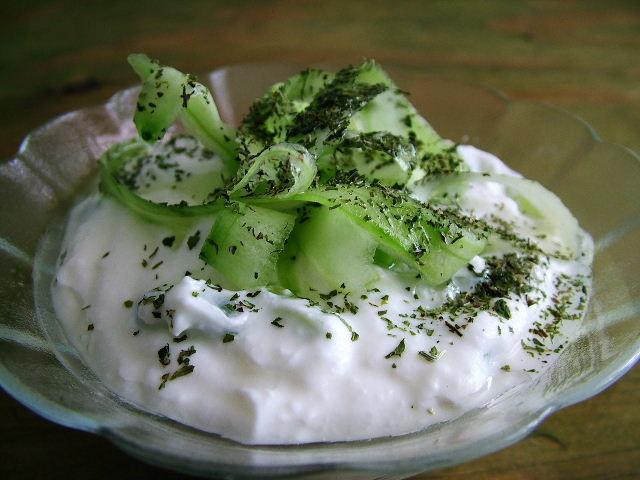
YOGURT


A dish that is to be accompanied by yogurt is a must on any traditional Turkish table - unless of course, there is already another dish whose main ingredient is yogurt. For thousands of years, yogurt has been an indispensable element on Turkish tables. It is consumed plain or as a side dish, and it is a crucial part of Turkish Cuisine. Yogurt is used to make soups, sweets, and the favorite drink ayran, which is made by mixing in water, mineral water and salt. Another reason why Turks hold yogurt dearly is that all over the world it is consumed and known as “yogurt,” which is a word of Turkish origin.

About a thousand years ago, Turks were the first to make Yogurt. The oldest known lexicon of the Turkish language, Kasgarli Mahmut’s Divân-i Lûgat’i Türk has an entry for the same word, and it has the same meaning. At the time, Turks still led nomadic lives and had devised numerous methods to preserve their food for their long journeys. This is one of the reasons why milk was made into yogurt. The best quality yogurt is produced through the fermentation of cow and lamb’s milk. It is not surprising that dairy products made from these animals are Turkish inventions; Central Asian Turks were the first to domesticate lambs and cows. As it was first spreading into Europe and elsewhere, this thick, white dairy product was used for therapeutic purposes; in the 20th century, its daily use spreads all around the world.

The transformation of milk into yogurt is the feat of lactic acid-yielding microorganisms. Yogurt is basically coagulated milk produced by the partial transformation of milk lactose into lactic acid through the effect of yogurt yeast. The initial production step is to boil the milk. The boiled milk is left to cool until it won’t burn your finger and then two teaspoons of starter yogurt added gently from the edge of the container. The container is then sealed and usually placed in a nest of towels to keep the milk warm and the fermentation going. Fermentation takes 4 to 5 hours at a temperature of approximately 37 degrees.

Yogurt can be classified under three groups depending on the production method; in addition to the regular yogurt whose production has been outlined above, there is also the Silivri Yogurt and strained yogurt. Silivri style yogurt is proper to the Istanbul region, and it is produced with lamb’s milk only. This is a tasty, firm and very creamy variety of yogurt. The procedure involves first boiling the milk in large cauldrons. Then the milk is poured into containers in a way to develop froth. Blazing coals are placed under these containers, and the yogurt is left to sit. Consequently, a harder and slightly cooked creamy top is obtained. When the containers are cool enough, glass syringes are used to inject yogurt yeast to the mixture from all four corners. Following this procedure, the containers are sealed with large wooden covers. After settling for 4 to 5 hours, the Silivri yogurt is then ready for consumption. The same initial procedures are followed to produce strained yogurt, however the creamy top is later removed and the remaining yogurt is placed in finely woven cloth bags. The bags are then hung at a height to allow the liquid to strain off. Finally, the strained yogurt is transferred to tin containers. Strained yogurt contains no vitamin B, since this ingredient is moved out along with the liquid as it is strained off.

It would be almost impossible to find a Turkish household that does not have yogurt in the refrigerator. Turks, who use yogurt widely, believe that it is a health food, with ability to cleanse the body from toxins and poisons. Even dreaming of yogurt is considered a good omen as a sign of upcoming wealth and a long life.
 
Reference: Yesim Gokce (Bilkent University)/Turkish Cultural Foundation

source


May 25, 2011

Bamboo Voices- Khamvong Insixiengmai Ensemble


a post ready since some time-excuse my absence from this lovely place, if you missed me-I doubt :)
 (combination  of successive pc crashes,data losses  and extremely busy with work)
 I promise to be a good boy from now on and participate more actively 
and since music from Laos is almost a rarity in the webs,here's what I've got.-god knows how it came to me...

The best known musical instrument of the Lao is the khene, a three-foot long bundle of fourteen or sixteen bamboo tubes enclosed in a carved wooden windchest.
Within the windchest, each pipe has a small metal reed similar to those found in a pump organ,accordion, or harmonica.
The player inhales and exhales through the windchest, covering one  or more finger holes at a time.
 Each pipe whose fingerhole is covered plays the same pitch, inhaling or exhaling,
permitting the player to produce both drone harmony and patterned harmony.
Because the notes are tuned in a manner similar to Western music, khene music sounds more familiar and accessible to most Westerners than does music from other parts of Southeast Asia.
Vocal music, which in Lao is called lam or khap, is the most important kind of music in Laos.
The performance takes the form of a staged courtship between male and female singers.
Accompaniment is mainly provided by the khene, but other instruments,
such as the phin (plucked lute·sometimes called kachappi) and the so (bowed lute) as well as rhythm instruments (drums, gongs, cymbals) may also be featured.
Years ago, khene players were generally of local origin, while singers were often brought from far away. 
ln modern times, singers usually retain their own favorite and skilled accompanist.
Poems are usually sung from memory, though the best singers are able to compose poetry spontaneously while singing. Lyrics are organized into four-line stanzas, each often having seven basic syllables. 
ln addition, each line may begin with a prefix and conclude with a suffix.
 These serve to complete the meaning or soften the words. 
A complete performance begins with an opening verse, then proceeds directly to the main poem,
 and concludes with a final or closing poem. Male and female singers alternate, as they feign a first meeting singing verses like “what is your name?", "are you married?". 
They might then engage in discussion about each other and about general knowledge issues(Buddhism, history, literature) until they finally part in sadness. 
Many lines are comprised of sophisticated phrases with double meanings
since, according to custom, direct statements are to be avoided.
Lao is a tonal language and a particular melody may be sung many different ways depending on the number of the words in the verse and the tones of the vocal inflections.


from the notes

bamboo


October 11, 2010

Tea Music

Kizaemon Tea-Bowl, Korea, 16th Century (used for Tea Ceremony, 17th Century)
  
Traditional tea ceremonies were originally performed by Buddhist monks in sacred mountain temples. The tea ceremony strengthens connections with nature and is considered valuable for cultivating a peaceful mind. These compositions function as "a bridge between tea and music in Korean tradition."

  
Tea Music [Da'ak] Vol. 1 - 5

Tea Music 1 - Two Themes on the Fragrance of Tea - Hwang, ByungKi
Tea Music 1 - Tea Music - Leaves, Water, Light - Yi, KonYong
Tea Music 1 - Ode to Tea Fragrance - Paik, ByungDong
Tea Music 1 - Ensemble No 8 Tea Mind, Tea Music, Tea Zen Samadhi - Kim, HeeJo

Tea Music 2 - In Praise of Tea-Tao - Yi, SungChun
Tea Music 2 - Cho Il Incense - Park, IlHoon
Tea Music 2 - Su Ryong Uhm (Water Dragon Moan)
Tea Music 2 - PyungJoHoeSang - New SangRyungSan

Tea Music 3 - Dong Ta Song - Park, IlHoon
Tea Music 3 - Cho Dang - Yi, ChongKu
Tea Music 3 - Il Ji Ahm - Kim, YoungDong
Tea Music 3 - MyungSun - Bak, DongUk

Tea Music 4 - Four Seasons - Winter - Night - Kim, JongSu
Tea Music 4 - Four Seasons - Spring - Dawn - Kim, JongSu
Tea Music 4 - Four Seasons - Summer - Midday - Kim, JongSu
Tea Music 4 - Four Seasons - Fall - Evening - Kim, JongSu

Tea Music 5 - Good Time for Tea Drinking, Elegance - Cloud - Park, InHo
Tea Music 5 - Good Time for Tea Drinking, Elegance - Moon - Kim, SongKyong
Tea Music 5 - Good Time for Tea Drinking, Elegance - Wind - Park, IlHoon
Tea Music 5 - Good Time for Tea Drinking, Elegance - Star - Yi, KonYong
Tea Music 5 - Good Time for Tea Drinking, Elegance - Sun - Hwang, UiJong

source


TEA MUSIC [DA'AK]
KOREAN CREATIVE MUSIC SOCIETY

Rituals of tea-drinking are followed throughout the world. The mystical properties of tea are celebrated, mostly without thinking, in the daily lives of millions. In Korea, tea and music have a special and spiritual relationship. The Korean Creative Music Society’s Tea Music [Da'ak] explores the intricate association between Korean music the ancient art of tea-making.

Drawing inspiration from the love of tea to be found in both traditional and contemporary worlds. Tea Music [Da'ak] combines dance, art and a tea ceremony with exquisite Korean music played on traditional instruments.

These include the daegeum (a large Korean flute), danso (a small bamboo flute), gayageum (a 25 string instrument), yanggeum (a Korean zither) and geomungo (a 6 string instrument).

Take time out from the tension and stress of today’s modern life and be transported by this delicate and tranquil piece of perfection.


August 23, 2010

Music Is

A Poem by Jazz Bassist William Parker

Music is the abysmal rainbow that bridges endless galaxies.

It is the waterfall flowing through the desert,
the mother, the offspring, the ointment, the foot and hand of the wind.

All of nature is music: the many colored skies, space and planets.

Music is every wondrous canyon in a miracle’s dream. Music is evolution, the seed of change.

Music existed and exists with or without human beings.
No race invented music.

Music is a form of energy, like the sun.
Music is the voice through which spirits speak, using a language that is beyond words,
a music that is beyond notes.

Music informs us with a reality that is scented with the eternal.

Music is the tireless swan knitting landscapes of hope.
Music is the cry of life and death at birth and conception, the heart beat, the pulse, the healer and the healed, the color portrait, the magical stone and the magical mists living side by side.

Music is the chirping of birds; is the grass beneath the cracked shells.
Music is dance and the dancer. It is poetry and the poet. Music is all children. Music is hot cornbread. Music is the kindness one finds in a crayon drawing.

Music is wood touching word.
Imagine a doorbell made of light.
Imagine the house that we would enter if we rang that bell.
Music is the rhythm of butterflies.

Music is hungry stomachs being filled. Music is justice.
Music is blue water, blue whales, and blue cornmeal.
Music passes through some while others reject the image.
The best music teacher is an oak tree. Music cannot be taught.
Music is alive. Music is a pasture of yellow grass 6-foot tall.
Music tolls from the earth and lands on the sky of another universe.
Music is drone over the Ganges.

Music is a snowflake floating on the ocean.
Music is silence.

There is no music in capitalism and imperialism. Music is the answer and the question.
Particles of music cannot be measured by scientific instruments. Music vibrates. Not all music vibrates at the same rate. Music is radiant. The blessing, the understanding, the fundamental eye revealing the surrender in the realm of brightness.

Music sometimes manifests itself as sound.

Music’s only wish is the well-being of all human beings.
Music exists to feed the spirit. Music is no war, not ever, for any reason.

Music is the fertilizer and the seed. Every second we live, music is dying for us.
Music will save the day. Music must save the day.
Music is the mother to the motherless, father to the fatherless.
Music is home to the homeless.


Dance music, wedding music, funeral music, march music, waltz music, wood music, steel music, voice music, tree music, ocean music, soil music, baking bread music, pastoral music, union music, trance music, religious music, perpendicular music, circle music, square music, Zion music, Shinto music, Buddha music, Islamic music, Hindu music, Winti music, music for Damballah, Erzulie, Ogun, Ghede, Asacca music for Quetzalcoatl, for the Adena Hopewell, music for the Red Paint people, music to make the moon laugh and cause the sun to turn blue. Music is the incubation of joy.

A symbol of music is Kokopelli, the hump-back flute player...

Music is the lasting response, the elixir. Music is nothing; music is everything.
There is more music in a baby’s smile than in a thousand symphony orchestras.
Music lives in the flute mountains that are made of melted diamonds. We drink them.
Our eyes sparkle like petals of a black rose.

Music to plant beans, to plant corn. Music the burning throne, the prodigal daughter, and rain cloud over the profound branches. The cry of praise, the memory, the entrance to the fire, oupas chanting.

The effect pulls on gravity.
Through music life is altered.
This energy, if visible, might resemble bands of light stretched
across fields of flowing ash going past layers of infinite habitation.

- William Parker

July 21, 2010

Spirits of Korea


 Ssitgim-gut performed by Park Byeong-cheon 
  
Tracks:
 
Spiritual Chanting and Prayer for Abundance
 
  1. Binari 08:34
 
Soul Chanting for Pacification of the Deceased
   
  2. Namdosamhyeon 01:29
  3. Yeongdotmari 03:21
  4. Gopuri 08:17
  5. Gilddakgeum 19:47
  
*Ssitgim performed by Park Byeong-cheon*
  

Park Byeong-cheon has been performing for someone for praying throughout his life. Such talent was inherited by his family and passed down through generations. His practices are engaged in equally not only for the living but also for the deceased. The sound that he unravels makes the living to be blessed, and it is the sound itself for spirits to find out the way of entering the other world for the deceased. His own sound thus is the embodiment of heaven, earth and human being.
 
He is a man of knowledge and understanding. This ability indeed leads him to solve all the concerns with ease, and this is achieved by his performances that are transformed into meaningful sounds. "My performing activities that I dance and sing should be regarded as life itself, not as artistic form", according to him, and this remark clearly delivers significant messages of what he performs. The jangdan (rhythmic cycle) our of dancing and songs that he unravels with his body may be an essential model that can be applied to the principle of Korean philosophy. The sound that he, in his 70s, releases certainly touches
our heart.
 
...
 
Praying & Well Wishing Remarks for the Living
  
Good health, longevity, wealth and prosperity are desired by all of us.
The shaman performs praying and well wishing remarks for the living.
 
...
 
Exorcising for the Deceased
  
Spirit of the dead becomes a soul, and it tends to continue to remain behind the living in order to enter the other world. Before getting into the better world, the spirit is cleaned by scented water and then it becomes a clean soul, when it is purified by mugwort, a fish and scorched smell are eliminated in it; when being purified by clean water, it becomes a clear soul. Then it is able to enter the other world when being exorcised the resentful spirit of the deceased. This is done by pallbearers' dirge who lead the purified spirit to the dead.


July 6, 2010

Japonisme

A brief mediation on cultural appropriation and authenticity


RESPONSE TO NAUMA'S COMMENT:

Dear Nauma, thank you for your comment and observation. And yes, you are correct, the Japanese have also engaged the "otherness" of Western culture, however historical circumstances resulted in a different approach. It was the West that prised opened Japan. The Meiji Restoration resulted in an all-out push for modernization/westernization. This was a Top-Down initiative (truly being a Divine Fiat since the Emperor was a god...). For the west, the encounter with Japan was a new "Flavor of the Month"; for Japan, the West was a matter of political, military and economic expediency. THis scenario has played itself out through East and South East Asia many times.

Having travelled to Japan (and LOVING IT!), ye, there is an apprehesion of the "exotic" west but something gets lost in translation, so to speak. Previous western commentators would not the lapses or "incomplete" quality of Japanese appropriation of western models,be they artistic, architectural, musical or whatever. (Just as there is an extremely superficial quality to most Wesern appropriations of Japanese models...). What I believe ACTUALLY occurred was a process of cultural editing according to Japan's own unique aesthetics. There are NO "lapses" in my opinion; rather a conscious decision to work with the new material on Japanese aesthetic terms.

Sometimes things get a little... silly. For whatever reason (I have NO explaination...), some western quirk embeds itself in Japanese culture... DEEPLY. I submit for your approval a musical example. I recall my amazement a couple of years back while listening to a collection of vintage Japanese film music to hear what was, a JAPANESE version of Rudolph Friml's "Song of the Vagabonds" from his early 20th century operetta "The Vagabond King." It was featured in the early Japanese film "Father and Son." It's a really GOOD version!!! While researching the film and this odd cultural cross-pollination, I discovered that the song had grown legs and continued to be a HIT in Japan, long after Friml and his operettas were forgotten in the West!

The song later was used for the end credits (and Japanese title) of the 1982 film by Kinji Fukasaku, "Fall Guy." Fukasaku would later go on to direct the popular "Battle Royal" series of movies.

To this day, Friml's klezmeresque melody can be heard in Japan as the boarding chimes at Kamat Station in Tokyo.

I have no explaination... ^_^

Link: gone

Videos:

http://www.youtube.com/watch?v=iGs87qSYLtI (Fall Guy end titles)

http://www.youtube.com/watch?v=1en-lmDjSIg&feature=related (Kamata Station chimes)

July 5, 2010

John Coltrane - Spiritual Jazz


"My music is the spiritual expression of what I am --- my faith, my knowledge, my being" - John Coltrane


...In 1957, Coltrane suddenly went through what he explained as "An experience, by the grace of God, a spiritual awakening which was to lead me to a richer, fuller, more productive life." He once again dedicated his life to God and the spiritual, but not necessarily the Islamic method. Coltrane believed in what is described as a "cosmic mysticism," (Kofsky) though he generally considered himself to be a Christian. He found his own music to be thoroughly spiritual in nature, and his experience with God to be exclusively personal. He became interested in Eastern philosophy and music as a solution to his intense need for self-expression, and discovered Hinduism, the Yoruba Religion of West Africa, Buddhism and others in his search for understanding and meaning (Horst). While the musical styles these religions embodied did not pervade Coltrane's work after he discovered them, he fashioned his philosophy of the world from them. Later he absorbed the foundations of their music into his own. Trane began writing pieces with Indian undertones, such as 1961's "India." His work absorbed Eastern musical ideas, and moved in avenues previously unexplored.
Spiritual tones and Eastern ideas were later used in Coltrane's piece "Alabama", about the Sunday morning bombing of a Birmingham church in 1963 (Strickland). During this time of Black Nationalism, Coltrane's music was propelled by avant-garde ideas, but Coltrane himself remained a pacifist despite militant upwelling within the black community. This was most likely due to his close personal relation to his God and newfound Eastern philosophy. While he did not want to fight, he did however want:


to be a force for real good. In other words, I know that there are bad forces,
forces out here that bring suffering to others and misery to the world, but I
want to be the opposite, I want to be a force which is truly for good (Kofsky).


read more: http://everything2.com/title/John+Coltrane+%253A+spiritual+jazz


thanks to tyrian

June 27, 2010

Creation

The Creator Has a Master Plan

by Pharoah Sanders and Leon Thomas


creation has a master plan,
peace and happiness for every man.
creation has a working plan,
peace and happiness for every man.
creation makes but one demand,
happiness through all the land.
 
shall I drop some words here? I don't know. Yes I changed the lyrics a bit, it's just words...Can't believe that this was one of my first LP's good American pressing... Yes there is music and there is music... This one is almost perfect... And creation is there all the time with us, we're part of it, can touch it, smell it, see it, feel it, hear it, understand it, at least try to, observing  the simple rules that rule the universe, yes it gets fucking difficult in the details, then step back, calm down, listen... if it feels right, it must be right and if it feels wrong, it must be wrong and it is not me who said that, it is nature talking... What the hell is religion doing here... what are they preaching... Let's listen to some real music again :)