hola all
it's been just less than a year and another summer,some.ages ago
Sidney Bechet for today
I like his 39 original but a second version a decade on,at the Paris Jazz Festival
maybe surpasses the first
and if you feel like me evoking old spirits come this way
Showing posts with label Jazz. Show all posts
June 27, 2014
November 18, 2012
Magic Malik Orchestra 69-96
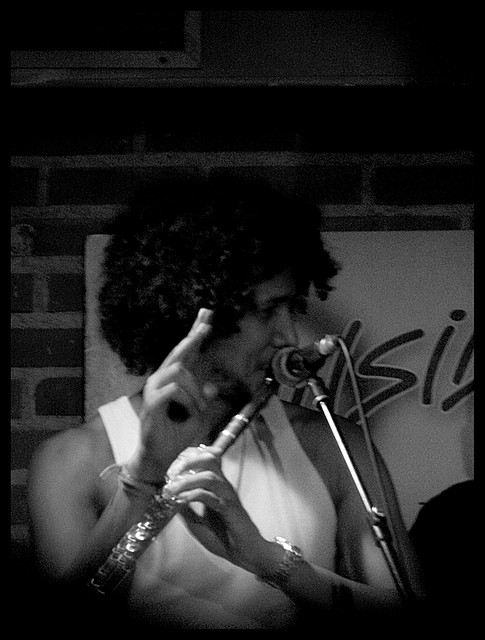
He left Guadeloupe at 17 and graduated from the Marseille conservatoire being the first flutist, he discovered jazz at that time.
As soon as he left the conservatoire, he got the occasion of playing in reggae band Human Spirit during 10 years.
Malik Mezzadri made multiple collaboration as a flutist with artists such as Lio, Teri Moise, Laurent Garnier, Saint Germain, Dj Gilb’R, FFF.
In 1992 he founded his first Magic Malik Orchestra which recorded its first demo released in 1997 under the name HWI Project via Salam Aleikum.
Then he met Julien Laurau who tours with his own band: the Groove Gang. In 1998 he takes part to the album City Boom Boom and joined the Groove Gang. In 1999 Malik goes on tour with the Groove Gang during several months across South America and Africa.
In 2000 he decides to start an album on his name and gathers a new Magic Malik Orchestra. It leaded to the recording of the album 69 96 via Label Bleu:
............................................
This music integrates so many influences seamlessly into one concept - North African, West African, bop, free jazz, classical, electronica and even Latin vamps. It's hard to see how all this should work together but Malik makes it work. In fact, it seems this IS Malik and therefore it works.
The arrangements are at times brilliant: just take the three bar Latin vamp (4/4-4/4-7/4) of Voleo that in and of itself would be great but serves as basis for Miles' Oleo which is played in 4/4 and therefore keeps on shifting on the vamp. Awesome effect: the repeats of the Oleo excerpt never sound quite the same and get completely integrated into the vamp. Very smart!
Malik's flute playing is fantastic! It's rare to hear a flute player in jazz who's actually good, but Malik is beyond good. He improvises with abandon, using angular altered lines (people like Rosenwinkl would be proud), free flurries, impeccable rhythm in any context (bop, rock/electronica, African, Latin...) and quite an edgy arsenal of classical quotes (a Bach phrase here and there, sometimes modulated to great effect). His tone on the flute is full and brilliant, unlike that of so many jazz flutists who are actually sax players and double up on the flute, usually to very little effect.... The spectacular singing technique is a show stopper.
The "orchestra" is great as well. There is an absolutely beautiful keyboard solo on one of these tunes (don't remember which at the moment), melodic and heart-wrenching. The grooves are super tight, drumming and percussion are standout (albeit the drumming at times gets a bit overpowering), the sax plays some great solos...
Most of the music is pretty high-powered and extroverted. There are a few moments of introspection (like the gorgeous low register flute playing at the outset of Pandemonium), but more of this to contrast the general high-decibel and upper register playing and arrangements would have made the disc even more subtle and beautiful.
Still, a must have
an amazon review
I can only agree with the above
a must listen indeed
November 15, 2012
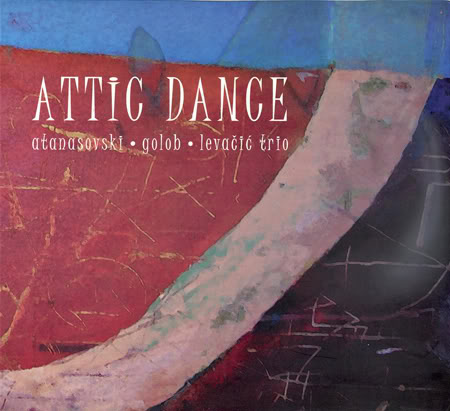
Atanasovski, Golob, Levačić trio - Attic Dance
Vasko Atanasovski - soprano, alto & baritone saxophone, flute, bansuri
Ziga Golob - bass
Krunoslav Levačić - drums
to
say
thegoodone
September 5, 2012
Vasko Atanasovski - Suite de passion
Saxophonist and flutist Vasko Atanasovski is one of the most creative and versatile Slovenian composers and musicians, well known for his cross-genre collaborations with world famous jazz, rock, classical, traditional musicians and his masterful approach to all styles of music. Up to this date he has released 10 highly acclaimed albums, received numerous awards as well as earned audience and critics’ compliments for his performances and compositions home and abroad. He is a regular guest on the European festival and concert circuit and has also performed in India, China and New York. His original compositions have also found a way into the world of theatre, dance and puppet shows, repertoires of eminent soloists, orchestras, ensembles and choirs. oficial
Vasko Atanasovski - sopran & alto sax, flute; compositions
Dejan Berden - piano
Roberto Bartoli (I) - contrabass
Passion to play
thegoodone to say
Vasko Atanasovski - sopran & alto sax, flute; compositions
Dejan Berden - piano
Roberto Bartoli (I) - contrabass
Passion to play
thegoodone to say
from linear notes: Vasko Atanasovski (born 1977 in Maribor) is one of the few Slovenian musicians who, besides researching contemporary improvised music, Afro-American and European tradition, ethnic music from different parts of the world, succeeded to develop exceptional originality in composition and musical style. Numerous projects, in which he had been researching new 9 concepts of communication, aesthetics and creativity, are behind him. In 1990 he won the r award on the competition of young saxophonists from former Yugoslavia. When he was seventeen, he began to play gipsy music and started to take part in dance and theater projects. In 1996 he joined the legendary Quatebriga jazz ensemble. Ever since he has been devoted to his own productions as a founder of many music groups and projects (Vasko Atanasovski Quartet, Vasko Atanasovski iMPRODooM, Slavika Ensemble, Solo Akupunktura, Atanasovski-Berden-Bartoli Trio). In 2001 he published Akupunktura, a small edition solo album, and in 2002 the album Heat Flower came out at the Austrian record label Extraplatte. Suite de passion brings forth contemporary music, marked with elements of flamenco, jazz and ".ein music. The idea is rooted in existentialism: the existence is a ,,passion in both senses, as md desire. These feelings inspired the conception of Suite de passion, dynamic and passionate v among the excellent improviser Atanasovski, outstanding Italian acoustic bassist Roberto imnd all-round Slovenian pianist Dejan Berden.
August 18, 2012
Free flute
Bass – Jan Jankeje
Drums – Gerhart Ziegler
Flute – Dieter Bihlmaier
01. Ovation (Ziegler) 05:47
02. Roulette (Bihlmaier) 06:19
03. Echoes (Jankeje) 08:35
04. Maskerade (Bihlmaier) 04:42
05. Gertuschka (Jankeje) 05:13
06. Free and Romantic (Bihlmaier) 07:48
07. Arco Oriental (Bihlmaier) 05:03
bye bye
says this ass
my work is done
it is up to you
to pass on thegoodone
for more info you got to grow some LONG HAIR.
Drums – Gerhart Ziegler
Flute – Dieter Bihlmaier
01. Ovation (Ziegler) 05:47
02. Roulette (Bihlmaier) 06:19
03. Echoes (Jankeje) 08:35
04. Maskerade (Bihlmaier) 04:42
05. Gertuschka (Jankeje) 05:13
06. Free and Romantic (Bihlmaier) 07:48
07. Arco Oriental (Bihlmaier) 05:03
bye bye
says this ass
my work is done
it is up to you
to pass on thegoodone
From the vaults of radio station SWF (today SWR) and previously unreleased, this fantastic group with a rather unusual instrumentation (flutes, bass, drums) blow your ears away. They played music you probably haven't heard before. Call it Free rock, living new jazz or just extremely good music, this trio is far out of any limitations. The music of the Dieter Bihlmaier Selection possesses genuine power, where explosive eruptions alternate with lyric moments. On repeated listening the music develops an irresistible pull that we wish to share with all lovers of "good music". These recordings are without any doubt not only of high musical value, they are also an absolute rarity, since unlike the two albums of the Dieter Bihlmaier Selection, they were recorded just in the trio formation flute, bass and drums and without the participation of the vibraphone player. The SWF-Recordings 1973 of Dieter Bihlmaier Selection are an outstanding musical achievement. CD comes with full coloured 12 pages booklet including band history and a lot of photos. Digitally remastered from the original master tape. If you want to listen to more...... listen to Dieter Bihlmaier Selection The SWF-Recordings 1973.
for more info you got to grow some LONG HAIR.
January 29, 2012
December 27, 2011
Balžalorsky Drašler 3o - Wu-wei

Vitja Balžalorsky - guitar, electronics
Jošt Drašler - bass
Vid Drašler - drums and other sounds
Young, Slovenian jazz trio with mature sound, left me surprised, even more when I noticed their age. I put the Cd in the stereo and some warm, pleasant tones filled the room, even my three and a half year old gave me an approving look nodding his head and lifting his eyebrows. There is an review on http://zalozba.radiostudent.si, please use translator,my English is too bad to translate it myself and I am also a lazy ass. Some comparison has been made with the ECM material, the peacefulness of John Abercrombie's jazz also has been mentioned, and some praises of Jošt Drašler's firm base, I agree with all of those claims, all is in favour of those three great musicians, that I hope that they look at a wonderful future.
Wu-wei by Balzalorsky/Drasler 3o
December 14, 2011
Tamara Obrovac & Transhistria ensemble - Sve pasiva (All fades away)

2 Sve pasiva / All fades away (5:01)
3 Ne plači Lucija / Don't cry Lucija (5:55)
4 Ča mi povida more / What sea tels me (5:58)
5 Cansoneita / Chanson (6:00)
6 Sexuvalna (5:42)
7 Duet / Duo (3:30)
8 Stila / quiet (3:30)
9 Sudba ti je došla / Your faith has come (4:21)
10 Divojka / A girl (4:44)
11 Ona je čekala / She has waited (6:10)
12 Črno zlo / Black evil (4:57)
13 Sexuvalna live - bonus track (4:53)
Life is short, don't waste time
a tune, write a rhyme
all will pass, even sound
what's to do, you demand
listen, laugh, have fun
and be thegoodone
The composer singer and flutist Tamara Obrovac, is one of the most impressive artists on the Croatian music scene, she is one of those musicians to whom jazz means a path to understanding music as a whole. Moreover, it has ushered her towards an intensive investigation of her own regional music awareness, so she offers us a new musical journey through the Istrian and Mediterranean spaces and times. Istria is here homeland, beautiful Croatian region, a North Adriatic peninsula, particular for It's musical and dialectal tradition, which is the creative force of her works. She writes lyrics in a local dialect and sings in an ancient dialect which is not spoken any more - the Istriotic dialect.
Her international Transhistria Ensemble incorporates elements of Istrian and Mediterranean national music, jazz, and many elements of modern music, and her music, completely original and autochthonous, goes beyond time and geographical boundaries, thus becoming a universal artistic message, establishing Tamara Obrovac as an exceptional artist who managed to create her own unique musical expression. This creative musician has become known for her highly aesthetic performances, her interpretations are suffused with spontaneity, inventive improvisation, freedom, humour and the ability to communicate with the audience, an artist of a strong persona, a life and artistic force able to enchant any audience...
As she said: “jazz is my freedom, and my roots are my inner truth...”
source
Personal note,
For me this is the best thing I heard In Croatian Discography. A balsam for a Mediterranean soul.
November 14, 2011
Sonny Sharrock/The Freedom Sounds Featuring Wayne Henderson: Black Woman/People Get Ready

Black Woman
1 Black Woman
2 Peanut
3 Bialero
4 Blind Willie
5 Portrait of Linda in Three Colors, All Black
- Sony Sharrock, guitar; Dave Burrell, piano; Norris Jones, bass; Milford Graves, drums; Linda Sharrock, vocals
People Get Ready
People Get Ready
6 Respect
7 People Get Ready
8 Cucamonga
9 Things Go Better
10 Fa-Fa-Fa-Fa-Fa (Sad Song)
11 Brother John Henry
12 Orbital Velocity
13 Cathy the Cooker
- Wayne Henderson, trombone; Al Abreu, saxes; Jimmy Benson, sax and flute; Pancho Bristol, electric bass; Harold Land, Jr., piano; Moises Oblagacion, congas; Ricky Chemelis, timbales; Max Gorduno, bongos; Paul Humphrey, drums.
How or why were those two put together I don't have a clue, I guss the motto was "and now something completly different". Anyway if you are in a mood for reading: Black Woman review or People Get Ready or you can read on both of them. Love the original Sharrock's cover.
7 People Get Ready
8 Cucamonga
9 Things Go Better
10 Fa-Fa-Fa-Fa-Fa (Sad Song)
11 Brother John Henry
12 Orbital Velocity
13 Cathy the Cooker
- Wayne Henderson, trombone; Al Abreu, saxes; Jimmy Benson, sax and flute; Pancho Bristol, electric bass; Harold Land, Jr., piano; Moises Oblagacion, congas; Ricky Chemelis, timbales; Max Gorduno, bongos; Paul Humphrey, drums.
How or why were those two put together I don't have a clue, I guss the motto was "and now something completly different". Anyway if you are in a mood for reading: Black Woman review or People Get Ready or you can read on both of them. Love the original Sharrock's cover.
One for our friend Miguel's collection of Baïlèros
ears here
P.S: And why is it Bialero instead of Baïlèro, please don't ask me. You can ask me what the pass is and I why I still use it, call it a habit of saying thegoodone.
ears here
P.S: And why is it Bialero instead of Baïlèro, please don't ask me. You can ask me what the pass is and I why I still use it, call it a habit of saying thegoodone.
Labels:
Baïlèro,
Jazz,
Sonny Sharrock,
The Freedom Sounds,
Wayne Henderson
October 26, 2011
Idris Ackamoor

...
After incredible performances and experiences during the fall of 1972 Margo, Kimathi and myself left Amsterdam on our way to Africa in December 1972. We flew to Malaga, Spain and then to Tangier, Morocco. We were almost turned away from touching the ground of Africa by a bellicose customs official who thought we were "hippies". Fortunately, we got pass the official and entered the mystical legendary Kasbah. The smells, and colors of the Kasbah were just more musical fodder for ater compositions.
We finally landed in Accra, Ghana where we made our home. A young Ghanaian named Kojo befriended us and his family led by the "Diamond Queen", Aunti Bea. We stayed with the family of Aunti Bea at her compound entitled, "Weekend in Havana". From this base Margo, Kimathi and myself became immersed in the color, fascination, and incredible musical life and culture of Ghana. Ghana was a musicians dream!! Music was everywhere.
We were musicians, college students, seekers, and acolytes in Africa. Margo and myself took an amazing musical spiritual journey up into Northern Ghana. The land of the Fra Fra of Bolgatanga, and the Islam influenced Dagom ba in Tamale. We had our instruments and a tape recorder in hand. It was as if we had stepped back five hundred years into an ancient Africa complete with court musicians and colorful pageantry....(Idris Acamoor in linear notes)

disk 1
1 Shepherd's Tune
2 Lands of Eternal Song Suite, Pt. 3
3 Lalibela
4 Masenko Nights
5 Ya A Ya A
6 River Ganges
7 Mohgo Naba
8 Queen of the Spirits, Pt. 3
disk 2
1 Aomawa
2 Birth/Speed/Merging
3 Black Man of the Nile
4 Africa
5 Spiritual Rebirth
6 Topanga
7 Centurian
8 Cubana
thegoodone is the word to say
pass by or stay
you are welcomed anyway :)
2-CD collection of the ex-leader of legendary Afro-spiritual/deep funk/free jazz group from 1970s Ohio (later in SF), The Pyramids.
Their music is one of the most deep attempts by African-Americans, deep sounds like Strata-East, aggressive performances like Tribe or Black Jazz, every free jazz/funk collectors should agree on it. Featuring 10 pieces of The Pyramids taken from their 3 albums and unreleased (!) recordings (included first live recording in Holland!). Notably The Pyramids had even stayed in African countries like Morocco, Ghana, Kenya & Ethiopia and studied real African culture & music there in the early 1970s. Do you know other African-American jazz musicians who had done such a road trip in early 1970s?
Also featuring never heard pre-Pyramids, P. Sanders & Strata East recording as The Collective, and 4 pieces from the late '70s to '00s, recording as Idris Ackamoor Quartet/Ensemble.
REVIEW:
As with every review of a release on EM records, we feel obligated to gush just a little. WHAT AN AMAZING LABEL! Most definitely the coolest reissue label going. Completely off the wall releases dug up and given new life. Amazing packaging, killer liner notes, tons of photos. So much love and passion obviously goes into each and every release we'd almost buy every one regardless of the music. Thankfully, pretty much everything we've heard so far is absolutely amazing, and well deserving of a deluxe reissue treatment. read more
2-CD collection of the ex-leader of legendary Afro-spiritual/deep funk/free jazz group from 1970s Ohio (later in SF), The Pyramids.
Their music is one of the most deep attempts by African-Americans, deep sounds like Strata-East, aggressive performances like Tribe or Black Jazz, every free jazz/funk collectors should agree on it. Featuring 10 pieces of The Pyramids taken from their 3 albums and unreleased (!) recordings (included first live recording in Holland!). Notably The Pyramids had even stayed in African countries like Morocco, Ghana, Kenya & Ethiopia and studied real African culture & music there in the early 1970s. Do you know other African-American jazz musicians who had done such a road trip in early 1970s?
Also featuring never heard pre-Pyramids, P. Sanders & Strata East recording as The Collective, and 4 pieces from the late '70s to '00s, recording as Idris Ackamoor Quartet/Ensemble.
REVIEW:
As with every review of a release on EM records, we feel obligated to gush just a little. WHAT AN AMAZING LABEL! Most definitely the coolest reissue label going. Completely off the wall releases dug up and given new life. Amazing packaging, killer liner notes, tons of photos. So much love and passion obviously goes into each and every release we'd almost buy every one regardless of the music. Thankfully, pretty much everything we've heard so far is absolutely amazing, and well deserving of a deluxe reissue treatment. read more
October 9, 2011
SavoirFaire - Running Out of Time

SavoirFaire explodes with joyous enthusiasm at the sounds made by another musician. So many times have I seen these expressions of pleasure and heard these shouts of approval. I 'realize that in these moments, he simply cannot contain his excitement and what a great thing that is.
Next I see an inward-centered and dark- edged violinist performing his elegiac classically bent solo piece "Aspen's Woes". The melody plays like the rainy-day watercolors of a child's mind: focused, wistful and dreamy. More than a song about one particularly special girl, the composition becomes a tribute to child princesses (and princes) everywhere, to their fragility, vulnerability and strength.
On the drive to the recording sessions one summer afternoon Savoir discussed the illusion we have all had that those around us are somehow background players to our own leading roles in life, as though we had the stage all to ourselves, to our egos. He spoke of music breaking down these walls, these facades — the harmony recreating itself in other forms, and die struggle to write and record the music that is always on the verge of slipping away.
I muse on Savoir's curiosity, his love of exploration and new ideas: his thirst for knowing about people and this planet in all of its manifestations: cultures ancient and present: where we are going and where we have been: and ultimately his interest in these questions; How can we put more of our lives into this design? What sort of soundtrack will truly accompany and enhance the state of our spirits today? What kinds of songs can promote our evolution and encourage us to be stars, that is - shining beings?...
Bill MacKay in linear notes
1. Running Out Of Time
2. One Inch Angels
3. Room For More
4. Martitha
5. Pendulum
6. Surazal
7. Interlude
8. Timetable
9. Sommer's Ashes
10. Aspen's Woes
Time well spent
word
thegoodone
Samuel SavoirFaire Williams
Born and raised on Chicago's south side, violinist SavoirFaire cut his improvisational teeth at local jazz sessions. His first performance was at age 5 on stage at Chicago Symphony Center's Orchestra Hall as one of 25 special Suzuki students. SavoirFaire
SavoirFaire might sound like the name of someone who specializes in dance music; it isn't hard to imagine a deep house, chillout, downtempo, or trance artist adopting the stage name SavoirFaire. But this SavoirFaire (whose real name is Samuel Williams) doesn't provide any of those things on Running Out of Time; he is a Chicago-based jazz violinist -- and when it comes to instrumental jazz, he is not easy to pigeonhole stylistically. Samuel "SavoirFaire" Williams (who wrote everything on this Bob Koester-produced CD) is quite capable of jumping from post-bop to fusion to avant-garde jazz; anyone who listens to the album in its entirety will get the impression that along the way, he has appreciated everyone from Regina Carter to Stuff Smith to Billy Bang to Jean-Luc Ponty. Parts of Running Out of Time find the Chicagoan getting into a '60s-minded post-bop groove; "Room for More" and the title track give listeners some idea what saxophonist Wayne Shorter or guitarist Grant Green might have sounded like on the electric violin when they were signed to Blue Note. But a more abstract and dissonant SavoirFaire emerges on the electric free jazz of "Surazal," which contains the disc's most outside playing. "Pendulum" moves into fusion territory, and the wistful ballad "Sommer's Ashes" has a '40s-like sense of romance; had SavoirFaire been around back then, the piece would have been appropriate for Lester Young, Stan Getz, or the Duke Ellington Orchestra. Much to SavoirFaire's credit, all this eclecticism doesn't sound forced or unnatural; he comes across as someone who genuinely appreciates a wide variety of jazz styles and has a need to express that appreciation on his violin. Running Out of Time demonstrates that SavoirFaire is well worth keeping an eye on. ~ Alex Henderson
Samuel SavoirFaire Williams
Born and raised on Chicago's south side, violinist SavoirFaire cut his improvisational teeth at local jazz sessions. His first performance was at age 5 on stage at Chicago Symphony Center's Orchestra Hall as one of 25 special Suzuki students. SavoirFaire
SavoirFaire might sound like the name of someone who specializes in dance music; it isn't hard to imagine a deep house, chillout, downtempo, or trance artist adopting the stage name SavoirFaire. But this SavoirFaire (whose real name is Samuel Williams) doesn't provide any of those things on Running Out of Time; he is a Chicago-based jazz violinist -- and when it comes to instrumental jazz, he is not easy to pigeonhole stylistically. Samuel "SavoirFaire" Williams (who wrote everything on this Bob Koester-produced CD) is quite capable of jumping from post-bop to fusion to avant-garde jazz; anyone who listens to the album in its entirety will get the impression that along the way, he has appreciated everyone from Regina Carter to Stuff Smith to Billy Bang to Jean-Luc Ponty. Parts of Running Out of Time find the Chicagoan getting into a '60s-minded post-bop groove; "Room for More" and the title track give listeners some idea what saxophonist Wayne Shorter or guitarist Grant Green might have sounded like on the electric violin when they were signed to Blue Note. But a more abstract and dissonant SavoirFaire emerges on the electric free jazz of "Surazal," which contains the disc's most outside playing. "Pendulum" moves into fusion territory, and the wistful ballad "Sommer's Ashes" has a '40s-like sense of romance; had SavoirFaire been around back then, the piece would have been appropriate for Lester Young, Stan Getz, or the Duke Ellington Orchestra. Much to SavoirFaire's credit, all this eclecticism doesn't sound forced or unnatural; he comes across as someone who genuinely appreciates a wide variety of jazz styles and has a need to express that appreciation on his violin. Running Out of Time demonstrates that SavoirFaire is well worth keeping an eye on. ~ Alex Henderson
September 28, 2011
Lloyd Miller & The Heliocentrics

On the heels of Strut’s successful award-winning pairing of the UK psychedelic electro funk/jazz ensemble The Heliocentrics with East African Ethio jazz pioneer Mulatu Astatke last year, the label decided to pair this British band with another enigmatic cosmopolitan jazz legend – Lloyd Miller. Casting off their electronic edge, for this project The Heliocentrics provide a deep, organic, and hypnotic Afro-Arab acoustic funk that flows and swings with agility behind the exotic tones and textures of Miller’s multi-instrumental explorations of Persian modalities and colors.
Miller is not just another jazzer attempting to jump on the world music bandwagon, but rather he is deeply committed to the foreign, namely Persian and Asian, musical traditions that give his brand of global jazz fusion a profound depth and authenticity. In fact, Miller has been mixing Middle Eastern music with jazz since the late 1950s, when he moved to Iran with his family. Building on his background as a Dixieland clarinetist and pianist, Miller studied with Middle Eastern music masters such as Dr. Daryush Safvat and Mahmoud Karimi, developing talents on multiple Persian instruments. He first showcased his unique Eastern-infused jazz on his seminal recording Oriental Jazz from the 1960s, which has since become a cult classic for global jazz connoisseurs and can now be heard on A Lifetime in Oriental Jazz, a recent compilation CD put out by the UK label Jazzman.
read more
....
1. Electricone
2. Nava Listen
3. Pari Ruu
4. Salendro
5. Spirit Jazz
6. Modality
7. Rain Dance
8. Lloyd Lets Loose
9. Bali Bronze
10. Cuzco
11. Charhargah
12. Sunda Sunset
Helio word is thegooodone
....
As an appreciator of exotica jazz, it’s hard to find a better one-stop shop than Miller. Born to a family where his father played clarinet and his mother was a ballet dancer, Miller spent time in Tehran, Beirut and most of continental Europe before receiving a B.A. in Asian Studies from Brigham Young University and an M.A. in Persian Studies from the University of Utah. During this time, he developed a talent for playing santur, zarb, oud, sehtar, dan tranh and dam kim in addition to piano. Persistent touring over the years has helped him stay fresh as a septuagenarian. The origins of this collaboration can be traced to a Jazzman compilation out earlier this year called A Lifetime in Oriental Jazz, which netted an invitation to the U.K. to work with Nostalgia 77 and The Heliocentrics. The latter collaboration produced an EP, and further studio time in February 2010 led to the music presented here.
Read more1. Electricone
2. Nava Listen
3. Pari Ruu
4. Salendro
5. Spirit Jazz
6. Modality
7. Rain Dance
8. Lloyd Lets Loose
9. Bali Bronze
10. Cuzco
11. Charhargah
12. Sunda Sunset
Helio word is thegooodone
Considering your styles are almost diametrically opposed, was there a lot of initial dischord between you and the Heliocentrics, or was the process pretty smooth?
They're very talented musicians, they hear that thumping rock beat, that hip-hop sound, and I just can't do anything with that. I don't even think Shelly Manne could do anything with it. It was a hard process -- it wasn't like they were bad musicians or bad guys, but it was like Tiger Woods going against wrestlers out to trip limbs. Not even Tiger Woods could do well dealing with that in the grass. I like to play jazz, and they're such nice guys that I didn't want to make them feel bad.
But there were people throwing their sticks on the floor, swearing and screaming. When they sent me the tracks, I initially said that I couldn't play on that junk. To me, it sounded like background music for a horror film. I try to make music that’s very beautiful, but not syrupy -- the sort of beautiful that Miles Davis made on "Kind of Blue." I want to make things that feel like watching the sun set at Santa Monica or Laguna. They wanted to make jumpy, scary music, so there was a problem.
...
When do you think things started to go downhill?
It was about 1955 or something. There was still some good jazz after that and I don't want to blame the four apostles of the devil for being out to destroy world music, but things just got wilder and louder and out of hand. But I think there's people out there who still connect to the old days. There's a bass player in my band who wears her hair like she lived in the 1930s or 1940s -- like she was straight out of a Doris Day film.
What might happen is that we go in this direction like the Salt Flats in Utah, where we're going 400 miles an hour and pretty soon you realize that you can't go any farther and you have to return to where you came from to avoid disaster.
Do you feel that there's a legitimate chance of this happening?
I’m kind of hoping that on my death bed, there's a neo-Puritan revival. I hope that people get tired of being drugged out and sleepless, and that there will be a movement among youth to wear long dresses and nice suits and not get any tattoos. They'd drink wheat grass, and praise the Lord and not be part of corporate entities that are quick to sell them junk. And they'd gravitate toward beautiful dreamy music like Ravi Shankar and Japanese cultural music, and maybe, just maybe, they’d discover an old LP from Lloyd Miller, and say that this idiot was trying to do it a very long time ago and he was ahead of the curve.
They're very talented musicians, they hear that thumping rock beat, that hip-hop sound, and I just can't do anything with that. I don't even think Shelly Manne could do anything with it. It was a hard process -- it wasn't like they were bad musicians or bad guys, but it was like Tiger Woods going against wrestlers out to trip limbs. Not even Tiger Woods could do well dealing with that in the grass. I like to play jazz, and they're such nice guys that I didn't want to make them feel bad.
But there were people throwing their sticks on the floor, swearing and screaming. When they sent me the tracks, I initially said that I couldn't play on that junk. To me, it sounded like background music for a horror film. I try to make music that’s very beautiful, but not syrupy -- the sort of beautiful that Miles Davis made on "Kind of Blue." I want to make things that feel like watching the sun set at Santa Monica or Laguna. They wanted to make jumpy, scary music, so there was a problem.
...
When do you think things started to go downhill?
It was about 1955 or something. There was still some good jazz after that and I don't want to blame the four apostles of the devil for being out to destroy world music, but things just got wilder and louder and out of hand. But I think there's people out there who still connect to the old days. There's a bass player in my band who wears her hair like she lived in the 1930s or 1940s -- like she was straight out of a Doris Day film.
What might happen is that we go in this direction like the Salt Flats in Utah, where we're going 400 miles an hour and pretty soon you realize that you can't go any farther and you have to return to where you came from to avoid disaster.
Do you feel that there's a legitimate chance of this happening?
I’m kind of hoping that on my death bed, there's a neo-Puritan revival. I hope that people get tired of being drugged out and sleepless, and that there will be a movement among youth to wear long dresses and nice suits and not get any tattoos. They'd drink wheat grass, and praise the Lord and not be part of corporate entities that are quick to sell them junk. And they'd gravitate toward beautiful dreamy music like Ravi Shankar and Japanese cultural music, and maybe, just maybe, they’d discover an old LP from Lloyd Miller, and say that this idiot was trying to do it a very long time ago and he was ahead of the curve.

September 26, 2011
Archimedes Badkar – Tre

"What a long strange trip it was", to paraphrase The Grateful Dead, only it wasn't that long - but it sure was strange! Archimedes Badkar ("Archimedes' Bathtub") was started by yours truly in elementary schools eight grade (1972) in Grondal, southern Stockholm as a combined light-show(!) and music unit: just a bunch of kids messing around, our influences ranging front complex Zappa-isms and Coltrane/Shepp/Sanders -free jazz" to the minimalistic methods ofTerry Riley widened with the arrival of "real musician- Jorgen Adolfison, who brought with him his vast knowledge of traditional music Irons all over the globe. Our real-life heroes were the grown-ups in -FIlisket Brinner" (with Sten Bergman), "Triid, Gras & Stenar- (with Thomas Mcra Gam and Torbjorn Abelli), "Arbete OcIs Fritid" (with Bengt -Beebe- Berger, Kjell Wesding, and later Tord Bengtsson) and the late Don Cherry, who resided in Sweden at the time, and whose fellow musicians included Christer BotIsa and -Beebe" Berger. Making a record was a seemingly unobtainable fantasy.
So it still amazes inc that in 1979 Archimedes Badkar had released four albums (including a double one), Don Cherry had been a frequent guest artist, Kjell Westling had recorded and toured with the band, and the other musicians mentioned above were all members of the band !
But before that the first years of playing benefit gigs and free festivals were really chaotic, in sort ola "anything goes" spirit of the time - to say that the audiences never knew what to expect would be a subtle understatement: hell, we didn't know what to expect ! The number of people on stage would range from four to twenty (including fire- eaters and extravagantely dressed dancers - Sun Ra surely was an influence). Guys we had never seen before would turn up with guitars and big amps (including one Che Guevara-look-a-like biker with enormous chains around Isis waist). It was hard to tell who was actually a member of the band, and what instrument they played.This is certainly true in the case of brilliant guitarist and bass- player Christer Bjernelind, who would turn up for rehearsals carrying the pieces of a clarinet in a plastic bag, a tenor saxophone with a rope as neck- strap, or, on one particulary memorable occasion, a vibraphone Ise had transported across town on it's wheels.
By the time -Tre", our third album, was recorded in 1977 things were comparatively more tightly structured. But we still kept things quite open, moving from thumb piano duos to indian instrumentation with electric bass soloing, to full "jazz- line-up of horns, piano, bass and drums.

When I left the band to fully concentrate on my duties in "Peps Blodsband" Bengt became bandleader and eventually transformed the band into "The Bitter Funeral Beer Band", developing his arrangements of music from Ghana that had started with "Darkpen". The album "BITTER FUNERAL BEER" (ECM 8393082) features Don Cherry, the Adolfssons, Bothen, Kjell Westling, Krantz, Thomas Mera Gartz, Tord Bengtsson and others. Christer Bother' recorded one of the best albums I've heard (big words, but I mean it), "TRANCE DANCE" (up-coming CD- re-release on MNW) featuring musical impressions of his stays in Mali and Morocco with Bengt, Mera, the AdolSsons, Wesding, Krantz, Bengtsson and his newly-formed band "Bolon Bata".
jorgen and Tommy continued to work as a duo called the "KARL BROTHERS" (though they are only musically, not genetically, brothers), recording a great album in 1994 (Slask Records SI.ACD 009).
I have made nine solo albums to date (inclu
ding one collaboration with the late painter and poet Mati Klarwein) featuring contributions from the Adolfssons, Botha, Berger, Christer Bjernelind, and Peter Ek who together with Jorge!' is part of my current band which can be heard on the CD "UNIVERSAL RIDDIM" 1'M1VW/RUBCD 17).
Archimedes Badkar has yet to follow the ongoing trend of re-unions, but with the release of this CD, who knows ?
— Linear notes Per Tyernberg,
Stockholm, May 2003 •
2 Wildlife
3 Akombah
4 Bhajan
5 Slum
6 Thumb Piano Music
7 Suite: Pharoah / El Legend / Marrakech
8 Desert Band
9 Tzivaeri
10 Nomads
11 Yugoslavian Dance
12 Jorden ("The Earth")
13 Charmante Yerevan
14 After The Rain / Waterfalls
15 Darkpen
word to pass around the bathtub is thegoodone
September 24, 2011
Spirits & Gifts
the focus for today is on this contemporary rhythm shaman and renaissance man :
Originally from Chicago, composer and handrummer/percussionist Adam Rudolph has, for the past three decades, appeared at festivals and concerts throughout North & South America, Europe, Africa, and Japan.
In 1988 Rudolph began his association with the legendary Yusef Lateef, which lasts to this day. He has recorded 14 albums with Dr. Lateef including their large ensemble collaborations: “The World at Peace” (1995), “Beyond the Sky” (2000) and 2003’s “In The Garden” with Rudolph conducting his Go: Organic Orchestra. He has performed worldwide with Dr. Lateef in ensembles ranging from their acclaimed duo concerts to appearing as guest soloist with Koln, Atlanta and Detroit symphony orchestras.
Since the 1970’s Rudolph has been developing his unique syncretic approach to hand drums in creative collaborations with many masters of cross-cultural and improvised music such as Sam Rivers, Pharoah Sanders, L. Shankar, and Fred Anderson. He is known especially for his innovative small group and duo collaborations with Don Cherry, Jon Hassel, Wadada Leo Smith, and Omar Sosa.
Since 1992 Rudolph has led his own performing ensemble, Adam Rudolph’s Moving Pictures, featuring drummer Hamid Drake, Ralph Jones, and Venice based Butoh dance innovator Oguri. The group has performed in both Europe and the United States, and has released several CD’s featuring Rudolph’s compositions. In 1995 he premiered The Dreamer, an Opera based on Friedreich Nietzsche's "Birth of Tragedy".
links:
http://www.metarecords.com/adam.html
http://www.metarecords.com/
http://en.wikipedia.org/wiki/Adam_Rudolph
"Most musicians come to grasp an understanding of music in terms of style - such as the predominant style of music of the sixties. When you look underneath style, then you see more basic components, like rhythm and harmony. But at an even more essential level there is music as vibration; and I think this is the deepest level of understanding we can pursue".
"What's passed on is specific musical information about intervals, rhythms, use of sound and silence. But the more profound things that we learn from the elders have to do with an attitude and a reverence toward the creation of music. Don [Cherry] said to me: 'You have to respect the silence before you can respect the sound.'
2 gifts to keep you busy:)
Gift of the Gnawa with Hassan Hakmoun and Don Cherry
Labels:
Adam Rudolph,
Don Cherry,
Gnawa,
Hamid Drake,
Hassan Hakmoun,
Jazz,
Pharoah Sanders
July 15, 2011
Makanda Ken McIntyre

McIntyre was born in Boston, Massachusetts. In addition to his primary instrument, the alto saxophone, he also played flute, bass clarinet, oboe, bassoon, and many other woodwind instruments, as well as double bass, drum set, and piano. He recorded thirteen albums, one of which was released posthumously. He composed well over 400 compositions, and wrote about 200 arrangements, reflecting the culture of his Caribbean and African American roots, including blues, jazz, and calypso. His very first album entitled Stone Blues was recorded in 1960, accompanied by local Boston musicians with whom he had been rehearsing for several years.
In the early 1990s he changed his name to Makanda Ken McIntyre. While performing in Zimbabwe, a stranger handed him a piece of paper with the word "Makanda" written on it; the word means "many skins" in the Ndebele language and "many heads" in Shona.

In the Wind: The Woodwind Quartets
1. Peas 'n' Rice 7:10
2. Home 6:42
3. Charshee 7:25
4. Black Sugar Cane 6:39
5. Chitlins & Cavyah 8:12
6. Mambooga 4:43
7. Blanche 9:54
8. Puunti 6:28
9. Chasing The Sun 6:26
10. Eileen 5:44
11. Amy 5:36
In his final years, multi-reedist Makanda Ken McIntyre was fond of saying in concert that a piece was off his last album, which came out more than twenty years prior. He would laugh, but the joke pointed out how criminally underdocumented he was during his life. In June 2001, that industry oversight was finally corrected with the release of A New Beginning , a bitterly ironic title since he died the same month.
McIntyre's associations were few, which perhaps is why he was so little recognized. He played a short stint with Cecil Taylor in 1966 and featured Eric Dolphy on the 1960 quintet recording Looking Ahead. With his interest in the woodwind family and the strong compositional sense he brought to his improvisations, Dolphy was perhaps the closest McIntyre had to a kindred spirit. In a just jazz world, McIntyre would also have enjoyed the sort of accolades Dolphy received.
He might get those laurels through the work of the Contemporary African American Music Organization (CAAMO), a project McIntyre himself founded over twenty years ago and which is now overseeing the release and publishing of his remarkable vision. In the Wind , the first CAAMO release, was recorded in October of 1995 and April of 1996, and it features a multi-tracked McIntyre playing a variety of pieces for quartets of like instruments. From a lovely clarinet setting of his staple "Peas 'n' Rice" to more challenging (for player and listener) pieces for oboe, English horn and bassoon, the disc is a gorgeous tribute while providing a fascinating insight into the composer and performer. For studio constructions, the pieces are surprisingly warm. At the same time, it carries the uncanny feeling of multi-tracked works by other masters (eg. Roscoe Mitchell) that give several voices to a single mind. The inner workings are made apparent by exponent.
CAAMO is in the process of cataloguing some five hundred compositions and two hundred arrangements by McIntyre, as well as digitizing over seven hundred recordings for donation to the Library of Congress and establishing repertory ensembles. It might engrave into history a great mind for the music. Better late than never. AllAboutJazz
---------------------------

The Contemporary African American Music Organization (CAAMO) was founded in 1983 by the world-renowned multi-instrumentalist, composer, orchestrator and educator Dr. Makanda Ken McIntyre. The mission of The Contemporary African American Music Organization is to promote free expression and continuing education in music and the performing arts with African-American origins.
CAAMO has produced more than 250 performances and educational workshops at venues throughout the New York City metropolitan area, including the Schomburg Center for Research in Black Culture, Carnegie Recital Hall, the Museum of Modern Art, the American Museum of Natural History, Roulette, the Brecht Forum and the Knitting Factory. From 1984 to 1989, CAAMO sponsored open rehearsals and weekly performances by the CAAMO Orchestra. CAAMO has presented performances by a huge range of artists, including Dr. McIntyre, Craig Harris, Charli Persip, Wilber Morris, Joanne Brackeen, Jason Hwang, David Murray, Hamiett Blueitt, Sonny Fortune, Reggie Workman, Andrei Strobert, E.J. Allen, Donald Smith and Kwe Yao Agyapon.
In addition to its support of musical performance, CAAMO has produced workshops on music and creativity for students at the pre-school, elementary, secondary and collegiate levels. A partial list of participating institutions includes the New School University, Cornell University, New England Conservatory, Harlem School of the Arts, the CODE Foundation, the Philadelphia Clef Club for Jazz and the Performing Arts and the East Bronx NAACP Day Care Center. These workshops cover a wide range of musical and creative territory, including singing, rhythm, instrumental technique, composition, ensemble performance, history, theory and inter-disciplinary collaboration.

Makanda Ken McIntyre (born Kenneth Arthur McIntyre; also known as Ken McIntyre) (September 7, 1931 – June 13, 2001)wiki
May 31, 2011
Zim Ngqwana - Zimology : life through music
“The reason I’m interested in music of different cultures is the spiritual element. I like to deal in world music, all music and cultures. I don’t want to confine myself to South Africa.
“I sit at the piano and write a piece. For months I live with the stuff I am writing and I develop a certain relationship with the music. When I hand it over to somebody else to play, I become very sad when they play just the notes and leave out the energy and understanding of the piece. Too many of the young generation know nothing about intensity and compassion.
“It’s all in the interpretation. Drummers must stop just bashing the kit with sticks, they must learn to stroke the drum with brushes for a change. Don’t just play the music, understand it. You have to lock into the music and know the purpose of playing it.”
”Dancers give me more energy than musicians. I learned a lot, I always wanted to SEE the music as opposed to just hearing it.”
Zim has managed to obtain something all artists aim for, an individual voice. His music can be deep and beautiful, then suddenly turn, becoming aggressive and assertive.Tough and tender, inspirational and spiritual, all are adjectives that describe his work, and it’s quality is augmented by the emotional tie to his deep-seated roots.
His musical chemistry will add yet another formula to the laboratory of World Music.
As a parting shot he says “We are reaching a very crucial state in this country whereby people won’t be able to hide behind politics singing ’Viva Mandela’ in the songs. Now is the time for pure art.”
Zim went on to become a superb player and a composer of note, as well as an educator. He is akin to a Charles Mingus in his writing, which is best defined as Afro avant-garde and musically tells the tales of migrant workers in South Africa.
by Don Albert

A blend of Xhosa folk music and township jazz, Zimology celebrates the rich heritage of South African music while paying homage to an earlier generation of the country’s jazz masters. And while he indicated that he had listened to a wide variety of jazz albums with his brother, he acknowledged John Coltrane as his definitive influence after hearing the US saxophonist’s A Love Supreme.
“I was immediately drawn by the power of his music and since then I have always wanted to perform,” he said. “To me Coltrane sounds more African than many local jazz artists.”
1998
Zimology
note that
there is always a pass for the high pass:
thegoodone
more Zim on freedomblues
April 16, 2011
Tamara Obrovac - Transhistria

The composer singer and flutist Tamara Obrovac from the Croatian city of Pula is one of the most impressive artists on the Croatian music scene, and in the past few years she has become very popular due to the influence of the Istrian folk music that has been the creative force of her works. Istria is a beautiful Croatian region, a North Adriatic peninsula, particular for It's musical and dialectal tradition. She writes lyrics in a local dialect and sings in an ancient dialect which is not spoken any more - the Istriotic dialect.
Read morea at oficial site, withouth much exaggeration.

Tamara Obrovac / composer, voice, flute
Dario Marusic / violin, voice
Elvis Stanic / guitar, accordion
Žiga Golob / double bass
Krunoslav Levačić / drums
1 Spovidnik (0:24)
2 Črni malin / Black mill (4:03)
3 Nad moren / Above the sea (5:10)
4 Šenica / Wheat (4:01)
5 Predi šći moja / Spin my daughter (3:52)
6 Touca'La Louna / Touch the moon (3:49)
7 Gredu nan kralji / The kings are arriving (2:40)
8 Rondinella (3:02)
9 Joh (4:11)
10 Biscoti ruduladi / Rolled cookies (3:31)
11 Dušo moja / My dear (3:55)
12 Ej Marine / Hey Marin (2:31)
Trans in Istria
thegoodone, the usuall word
to keep your ears clear

The sopile (or roženice left picture, as it is called in Istria) is an ancient traditional woodwind instrument of Croatia, similar to the oboe or shawm. It is used in the regions of Kvarner, Kastav, Vinodol, Island Krk, and Istria. Sopile are always played in pair so there are great and small or thin and fat sopila. Sopile are musical instrument of sound very interesting possibilities and very piercing special sound. Sopile are, by "mih" and "shurle," today very popular in folk tradition of Istria, Kvarner and Island Krk.Rozenice are ancient traditional musical instruments which continue to be used today in the region of Istria. Rozenice are very similar to sopile from Island Krk. Rozenice are always played in pairs so there are great and small or thin and fat rozenica. Rozenice have a very piercing special sound, and have the possibility of producing a variety of sounds. Rozenice are, by "mih" and "shurle", today very popular in folk tradition of Istra.The sopila is a wooden horn originating from Istria and some of the northern islands along the Adriatic Coast of Croatia. Like oboes, sopilas have double reeds, but are always played in pairs; one larger than the other. Both have six finger holes, being equally spaced on the smaller one, and set in groups of three on the larger one. Often used to accompany dancing, the voice of the sopila is that of the Istrian scale. source
Some more on Croatian traditional instruments (sorry no translation, but if you have questions ask in coments)
April 14, 2011
Rudresh Mahanthappa - Apti

1. Looking out, Looking In
2. Apti
3. Vandanaa Trayee
4. Adana
5. Palika Market
6. Iit
7. Baladhi
8. You Talk Too Much
Apti
If you are lacking words, the word is thegoodone ;).
Rudresh Mahanthappa (alto sax)
Rez Abbasi (guitar)
Dan Weiss (tabla)
Composed by Rudresh Mahanthappa

"I first started a version of this group when I lived in Chicago back in 1996," Rudresh Mahanthappa explains. "There was a sort of pressure put upon me to do something Indian as there was no precedent for an Indian-American jazz musician at the time. I disbanded the group rather quickly as I felt I lacked the skills and knowledge to lead such a trio with musical and cultural integrity." Mahanthappa was concerned lest this attempt at crossing musical boundaries, sometimes as daunting as geographical ones, might collapse into "exoticism" or exploitation of his ancestry.Composed by Rudresh Mahanthappa

A dozen years later, Mahanthappa returns to the alluring intersection between jazz and South Asian music, and the result is a gripping recording that brings together contrasting traditions in a seamless whole. The affinity between Indian music and jazz, hinted at in countless modal recordings over the years, is made manifest in this high-voltage performance. From the opening melody statement, Mahanthappa plays right on top of the beat with a fierce insistence. Usually this type of playing strikes me as lacking in phrasing, yet the saxophonist shows that you don't need soft, warm contours to give shape to a melody line. If you put together the right combinations with the proper moments of emphasis, even a boxing match conveys beauty and grace. And, yes, this is something of a pugilistic performance. Mahanthappa's solo extends the energy and—perhaps even more remarkably—the vocabulary of the melody, and the torrent of notes does justice to both the South Asian and post-Trane tributaries that flow into its construction. Rez Abassi and Dan Weiss also impress on this track. The end result is surprising to the degree that it doesn't sound exotic, rather like a natural marriage of true minds to which none of us should admit impediments.
February 24, 2011
Arthur Blythe - Focus

Arthur Blythe-alto saxophone; Cecil Brooks III-drums; Bob Stewart- tuba; William Tsilis-concert grand marimba
1 Opus
2 Children's Song
3 C.C. Rider
4 Once Again
5 My Son Ra See All 4
6 Hip Toe
7 Night Song
8 Bubbles
9 Stuffy Turkey See All 2
10 Night Creeper
11 In A Sentimental Mood
12 Focus
Arthur Blythe has been busy (rewiev is from 2002). He has a new recording, and last month completed a stint with his quartet at the Jazz Standard. Blythe is living in his hometown San Diego again, so NYC jazz fans jumped at the rare opportunity to see him play live. The band - Blythe on alto, John Hicks on piano, Dwayne Dolphin on bass, and Cecil Brooks III on drums - was augmented by longtime Blythe collaborator Bob Stewart on tuba. Blythe's diverse repertoire provided springboards for intriguing soloing and group exchanges. The band "made it look easy" in the plush red velvet surroundings of the Jazz Standard. For those who missed Blythe's live shows, there's a very nice product in record stores now that features the core members of the live band - Blythe, Brooks and Stewart.
Focus sounds like it could have been conceived and recorded by some of the new crop of "downtown" musicians. The spare instrumentation and simple, elegant compositions sound fresh, relevant and forward-looking. But there's also a patina of maturity and self-assuredness that sets Focus apart from rawer, more experimental downtown sounds. That's because the musicians - supported on some tracks by special guest William Tsilis on concert grand marimba - have arrived at their maturity and self-assuredness through decades of experimental efforts. They've spent careers redefining jazz, and the fruits of their labor result in music that is relaxed and understated, yet emotive and powerful.
Drummer Brooks (who also produced the record) is a master of understatement. His impeccable time, thoughtful accompaniment and creative soloing are always tasty and right-on, and bring to mind how the great Art Blakey kicked a small band in the ass. The record's "secret weapon" is Tsilis. He fills a variety of functions - keyboard harmonist, comping colorist and most notably adds an African feel with authentic balafon-like playing. He also gets plenty of solo time, and the results are impressive.
Of course, the record is based around the team of Blythe and Stewart. These two dignified gentlemen, veterans of the ‘70s NYC "loft jazz" scene and countless projects since then, have a musical relationship that goes beyond familiarity. At their best moments, their playing together transcends the music and enters the realm of sound poetry. They can make pure statements. Their interplay - often with Stewart laying down a funky, ostinato bass line under Blythe's spiky, biting alto lines - has been going strong since Lenox Avenue Breakdown. It's now a polished act, and their voices fit like an old shoe.
focus on thegoodone to pass through
February 22, 2011
Chico Freeman & Arthur Blythe - Luminous

Chico Freeman & Arthur Blythe - Luminous
Recorded Live at Ronnie Scott's Club
1. Footprints
2. Luminous
3. You Are Too Beautiful
4. Naima's Love Song
5. Avotja
Customer Reviews from Amazon
I apologise for poor bitrate, I don't think it can be found on anay of blogs or open forums, recording has some briliant moments, especially from John Hicks on piano, it would be a shame to let it pass unheard it is thegoodone :). And it is Luminous.
Recorded Live at Ronnie Scott's Club
1. Footprints
2. Luminous
3. You Are Too Beautiful
4. Naima's Love Song
5. Avotja
Customer Reviews from Amazon
I apologise for poor bitrate, I don't think it can be found on anay of blogs or open forums, recording has some briliant moments, especially from John Hicks on piano, it would be a shame to let it pass unheard it is thegoodone :). And it is Luminous.
Subscribe to:
Posts (Atom)