Showing posts with label William Parker. Show all posts

August 5, 2011

The Free Zen Society


Zeena Parkins (harpsichord); William Parker (double bass); Matthew Shipp (piano); Arranger: Peter Gordon (All other sounds).


1. Lightly Dropping
2. Thought Free
3. Surrender
4. Dream Escapes
5. Majestical
6. Glistening
7. Streaming Through
8. Clocking Space


You have read the names behind this project, If you know their usual stuff you are in for a surprise (it might be pleasant).

May 20, 2011

William Parker - Long Hidden - The Olmec Series


William Parker’s new album, Long Hidden: The Olmec Series, explores and expands on the ancient DNA/cultural codex that connects Africa to The Americas - reflecting William Parker’s long abiding interest in and study of the continental connection between the Manding people of West Africa and the Olmec of ancient Mexico (root culture of the Maya forward). A meditation exercise toward your enduring pertinence in the present world? A ten-track introductory manual on how to comport yourself in the reigning parallel? Yes to both questions. 2012 is on its way, after all.

The album opens with an arrestingly spacious solo bass performance of the traditional hymn “There Is A Balm In Gilead”, one of William’s favorites. It continues episodically with music from three different sessions: The title track is a series of solo pieces on the 8-string doson ngoni (traditional hunter’s guitar from West Africa). William was introduced to the instrument in 1975 by Don Cherry. Parker writes in the liner notes, “I had already owned a kora, but it was the Ngoni that made my heart sing. This music is daily music. It is connected to the people sitting on the porch after supper, playing that old guitar, a suspending time of tuning and detuning dreams.” The two further compositions on solo bass are rendered arco, revealing William’s theory of music - sound is light and light is sound.

The third session, launching off the grid, are four pieces by THE OLMEC GROUP. These tracks are at the crux of Long Hidden – mysterious and entrancing sound poetry embracing the Caribbean and Middle America via inspiration drawn from the Great Stone Head of the Olmec. Further to William on percussion and 6-string doson ngoni, the O.G. is composed of Dave Sewelson: the veteran saxophone player who has been active on the creative music scene for the last thirty years, Todd Nicholson: a formidable presence on the bass who when not leading his own bands can be heard with the violinist Billy Bang, and - Omar Payano, Isaiah Parker, Gabriel Nunez and Luis Ramierez - all under 23 years old, who play Merengue music. William writes: “It is the sound of hieroglyphics coming off the scroll or stone wall and marching onto boats that will soon set sail. Where these boats will land I don’t know, this new journey is just beginning.”

* IN CASE OF ACCIDENT - originally issued on the cassette album, Painter’s Autumn, self-released by William Parker in 1994 and long since out of print. A truly epic solo bass piece recorded live in Montreal in 1993, and here given its first wide release on the outer rings of this first edition pressing of Long Hidden. - SJ

1. There Is a Balm in Gilead
2. Long Hidden Part Two
3. Codex
4. El Puente Seco
5. Long Hidden Part Three
6. Cathedral of Light
7. Compassion Seizes Bed-Stuy
8. Pok-a-Tok
9. Espirito
10. Long Hidden Part One
11 In Case of Accident [live] (H)
11 In Case of Accident [live]

William Parker (bass instrument, 8-string bass); Omar Payano (vocals, guiro); Luis Ramierez (accordion); Dave Sewelson (alto saxophone, baritone saxophone); Isaiah Parker (alto saxophone); Todd Nicholson (bass instrument); Gabriel Nunez (bongos, timbales).


Hidden passage from Manding to Olmec is thegoodone.


The Olmecs probably founded writing in the Mexico. Dr. Coe, in "Olmec Jaguar and Olmec Kings" (1968), suggested that the beliefs of the Maya were of Olmec origin and that the pre Maya were Olmecs (1968,p.103). This agreed with Brainerd and Sharer's, The ancient Maya (1983,p.65) concept of colonial Olmec at Maya sites. Moreover, this view is supported by the appearance of jaguar stucco mask pyramids (probably built by the Olmecs) under Mayan pyramids e.g., Cerros Structure 5-C-2nd, Uxaxacatun pyramid and structure 5D-22 at Tikal. This would conform to Schele and Freidel's belief that the monumental structures of the Maya were derived from Olmec prototypes.
An Olmec origin for many pre-Classic Maya, would explain the cover-up of the jaguar stucco mask pyramids with classic Maya pyramids at these sites. It would also explain Schele and Freidel's (1990,p.56) claim that the first king of Palenque was the Olmec leader U-Kix-chan; and that the ancient Maya adopted many Olmec social institutions and olmec symbolic imagery.

The Olmec spoke an aspect of the Manding languages spoken in West Africa, not Mixe- Zoquean as suggested by Terrence Kaufman. The African origin of the Olmec was based on the research of C.S. Rafinesque and Leo Wiener.

In 1832, Rafinesque published the in this paper he discussed the fact that when the Mayan glyphs were broken down into their constituent parts, they were analogous to the ancient Libyco- Berber writing (which can not be read in either Berber or Taurag, people who use an alphabetic script similar to the Libyco-Berber script which is syllabic CV and CVC in structure).

The Libyco-Berber signs are analogous to the Mande signs recorded by Delafosse (1899). These Mande speakers, or the Si people , now centered in West Africa and the Sahelian region formerly lived in areas where Libyco- Berber inscriptions are found (Winters, 1983, 1986). Using the Manding languages I have been able to decipher the Libyco-Berber inscriptions (Winters, 1983).

The second clue to the Manding origin of the Olmec writing was provided by Leo Wiener in Africa and the Discovery of America (1922,v.3). Wiener presented evidence that the High Civilizations of Mexico (Maya and Aztecs) had acquired many of the cultural and religious traditions of the Malinke-Bambara (Manding people) of West Africa. In volume 3, of Africa and the Discovery of America, Wiener discussed the analogy between the glyphs on the Tuxtla statuette and the Manding glyphs engraved on rocks in Mandeland.


I was able to test the hypothesis of Rafinesque and Wiener through a comparison of the signs inscribed on the Tuxtla statuette and the La Venta celts. Using the should values from the Manding symbols, to read the La Venta celts I was able to decipher both the celts and other Olmec inscriptions.

LaVenta Celt. The Priest Pe is surrounded by other members of the cult.
The Mande people often refer to themselves as Sye or Si 'black, race, family, etc.'. The Si people appear to have been mentioned by the Maya. A. M. Tozzer (ed.), Relacion de las Casa de Yucatan (Peabody Museum of American Archaeology and Ethnology ,1941) claimed that the Yucatec Maya said that the Tutul Xiu (shiu), a group of foreigners from zuiva, in Nonoualoco territory taught the Maya how to read and write. This term Xiu agrees with the name Si, for the Manding people (also it should be noted that in the Manding languages the plural number is formed by the suffix -u, -wu.

The Olmec script is a logosyllabic script. The Olmec had both a syllabic and hieroglyphic script. The hieroglyphic signs were simply Olmec syllabic signs used to make pictures.

Source

September 12, 2010

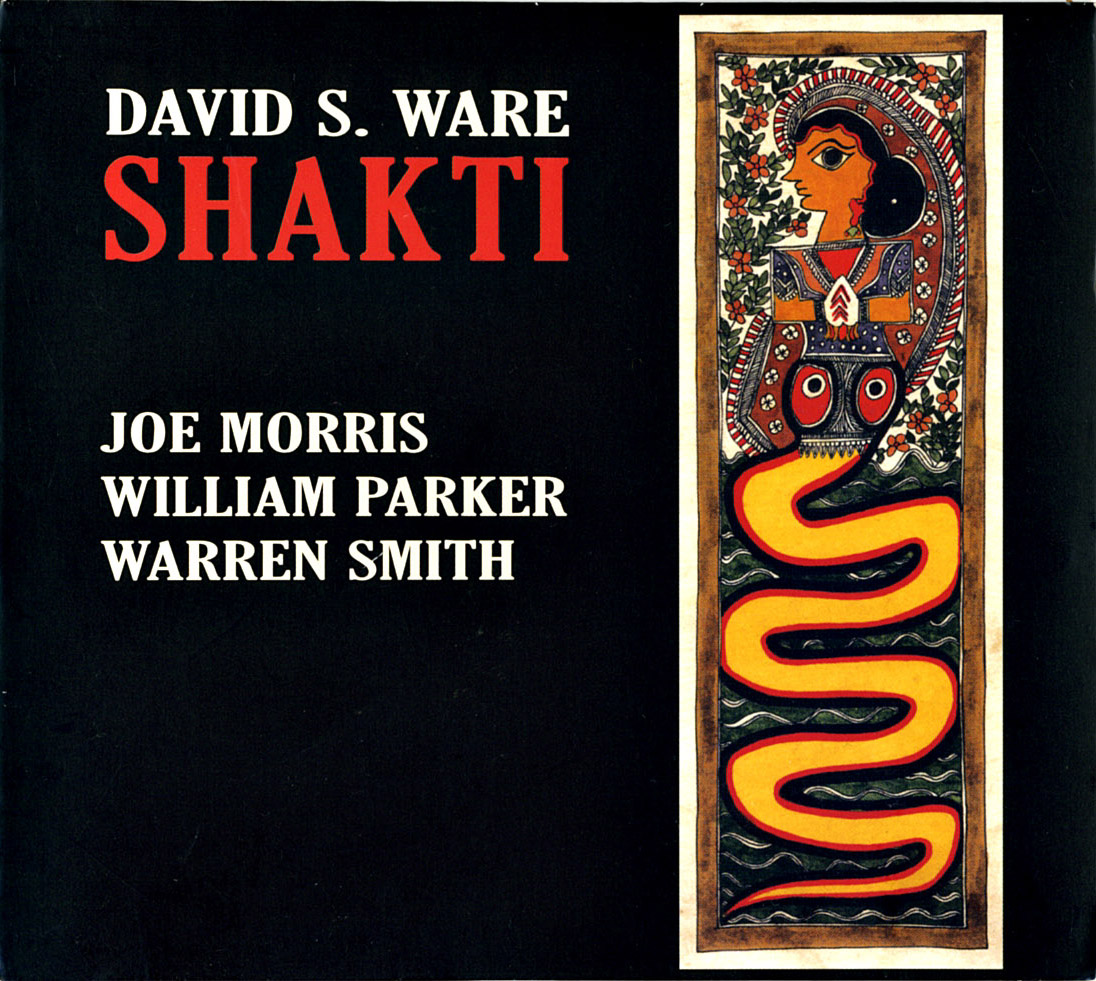
David S. Ware ~ Shakti


AUM Fidelity
Orig Year 2009


David S. Ware (tenor saxophone, kalimba);
Joe Morris Orchestra, Joe Morris (guitar, percussion);
William Parker (bass instrument);
Warren Smith (drums, percussion).


1. Crossing Samsara
2. Nataraj
3. Reflection
4. Namah
5. Antidromic
6. Shakti: Durga/Devi/Kali

...Yes, this is holy music, as suggested by the name of the title cut. Shakti is the Hindu term that can be loosely defined as the divine, creative cosmic force that occurs when a being is at one with the entire universe. Ware and company play to get in touch with these inner divinations in a way analogous to the manner in which some people pray to find the god within themselves...
Steve Horowitz


It soundzzzzzzz like .........

August 23, 2010

Music Is

A Poem by Jazz Bassist William Parker

Music is the abysmal rainbow that bridges endless galaxies.

It is the waterfall flowing through the desert,
the mother, the offspring, the ointment, the foot and hand of the wind.

All of nature is music: the many colored skies, space and planets.

Music is every wondrous canyon in a miracle’s dream. Music is evolution, the seed of change.

Music existed and exists with or without human beings.
No race invented music.

Music is a form of energy, like the sun.
Music is the voice through which spirits speak, using a language that is beyond words,
a music that is beyond notes.

Music informs us with a reality that is scented with the eternal.

Music is the tireless swan knitting landscapes of hope.
Music is the cry of life and death at birth and conception, the heart beat, the pulse, the healer and the healed, the color portrait, the magical stone and the magical mists living side by side.

Music is the chirping of birds; is the grass beneath the cracked shells.
Music is dance and the dancer. It is poetry and the poet. Music is all children. Music is hot cornbread. Music is the kindness one finds in a crayon drawing.

Music is wood touching word.
Imagine a doorbell made of light.
Imagine the house that we would enter if we rang that bell.
Music is the rhythm of butterflies.

Music is hungry stomachs being filled. Music is justice.
Music is blue water, blue whales, and blue cornmeal.
Music passes through some while others reject the image.
The best music teacher is an oak tree. Music cannot be taught.
Music is alive. Music is a pasture of yellow grass 6-foot tall.
Music tolls from the earth and lands on the sky of another universe.
Music is drone over the Ganges.

Music is a snowflake floating on the ocean.
Music is silence.

There is no music in capitalism and imperialism. Music is the answer and the question.
Particles of music cannot be measured by scientific instruments. Music vibrates. Not all music vibrates at the same rate. Music is radiant. The blessing, the understanding, the fundamental eye revealing the surrender in the realm of brightness.

Music sometimes manifests itself as sound.

Music’s only wish is the well-being of all human beings.
Music exists to feed the spirit. Music is no war, not ever, for any reason.

Music is the fertilizer and the seed. Every second we live, music is dying for us.
Music will save the day. Music must save the day.
Music is the mother to the motherless, father to the fatherless.
Music is home to the homeless.


Dance music, wedding music, funeral music, march music, waltz music, wood music, steel music, voice music, tree music, ocean music, soil music, baking bread music, pastoral music, union music, trance music, religious music, perpendicular music, circle music, square music, Zion music, Shinto music, Buddha music, Islamic music, Hindu music, Winti music, music for Damballah, Erzulie, Ogun, Ghede, Asacca music for Quetzalcoatl, for the Adena Hopewell, music for the Red Paint people, music to make the moon laugh and cause the sun to turn blue. Music is the incubation of joy.

A symbol of music is Kokopelli, the hump-back flute player...

Music is the lasting response, the elixir. Music is nothing; music is everything.
There is more music in a baby’s smile than in a thousand symphony orchestras.
Music lives in the flute mountains that are made of melted diamonds. We drink them.
Our eyes sparkle like petals of a black rose.

Music to plant beans, to plant corn. Music the burning throne, the prodigal daughter, and rain cloud over the profound branches. The cry of praise, the memory, the entrance to the fire, oupas chanting.

The effect pulls on gravity.
Through music life is altered.
This energy, if visible, might resemble bands of light stretched
across fields of flowing ash going past layers of infinite habitation.

- William Parker