

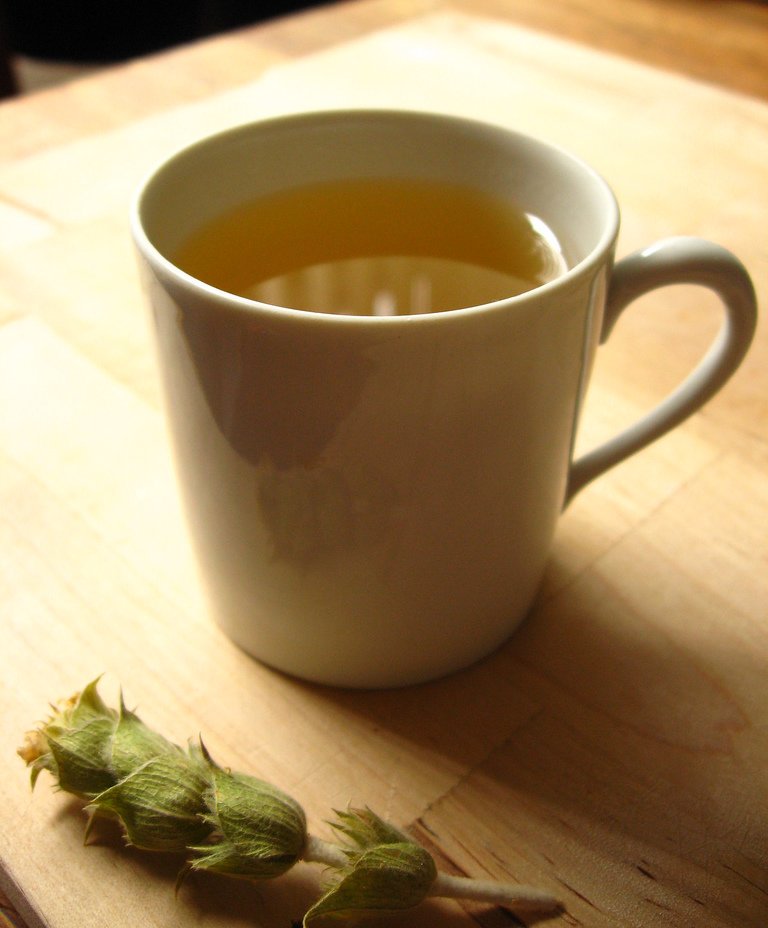
Malotira: Mountain Tea from Crete
Photo © Jim Stanfield
In Greek: τσαϊ του βουνού (pronounced TSAH-ee too voo-NOO)
Greek Mountain Tea is made using the dried leaves and flowers of
Sideritis plants (ironwort). The tea is aptly named: the plant used to
make it is found on rocky slopes at elevations over 3,200 feet (1000
meters). These plants are hardy flowering perennials that have adapted
to survive with little water and little soil. Only one type of this
plant, Sideritis raeseri, is cultivated - and only in Greece; otherwise,
this and other types are gathered in the wild.
On Crete, the common name for Mountain Tea is "malotira"
(μαλοτήρα - pronounced mah-loh-TEER-rah), and almost every region of
Greece has its own name for the brew, such as "Olympos tea," and
"Parnassos tea," reflecting the name of the mountain where it grows.
The most common English name other than Mountain Tea is "Shepherd's
Tea," because Greek shepherds would use the plants to make a brewed tea
while tending their flocks high in the hills.
Mountain Tea is enormously popular in Greece, and used most often
in winter when levels of physical activity decrease and colds, aches,
and pains increase. It is said to have a positive effect on almost
anything that ails but, most notably, it is used for colds, respiratory
problems, digestion, the immune system, mild anxiety, and as an
anti-oxidant. It is also used as an anti-inflammatory and to reduce
fever.
In Greece, it is sold in grocery shops, pharmacies,
herb-and-spice shops, or it can be picked fresh and dried at home.
Outside Greece, it is sold as "Greek Mountain Tea," or "Greek Mountain
Shepherd's Tea," at specialty shops, and it can be found online.
Ready to Get Healthy? Let's Make Tea
- 1/2 ounce of the dried leaves and flowers
- 1 quart of boiling water
- Pour boiling water over the tea and let steep for no longer than 10 minutes.
- Strain and drink (with honey, sugar, or plain).
Serving suggestions: Serve Mountain Tea at breakfast or before retiring at night, with Kalamata (black) olives, feta cheese, and crusty bread.
Greek grandmother’s rule of thumb: At least one cup a day! Here's to your health!
Tea and no music?

Greece ..... Tea & Bouzouki
1973
A1. Stavros Xarhakos - The Sakena Dance (Horos Tou Sakena).
A2. Manos Hadjidakis - Little Ivory Boat (Fildisenio Karavaki).
A3. Yiannis Spanos - Baglamas (O Baglamas).
A4. Demos Moutsis - The Dance (Horos).
A5. Stavros Xarhakos - The Hassapikos Dance (Hassapikos).
A6. Manos Hadjidakis - Star Of The Orient (Astro Tis Anatolis).
B1. Vassilis Tsitsanis - New Minore (Neo Minore).
B2. George Mitsakis - Aivaliotiko.
B3. Markos Vamvakaris - Solo Bouzouki.
B4. Yiannis Papaioannou - Solo Papaioannou.
B5. George Zambetas - My Life, My Love, My Bouzouki (Ta Telia Anapsane).
B6. Yiannis Papaioannou - The Papaioannou Bouzouki (Pennies Papaioannou)
1973
A1. Stavros Xarhakos - The Sakena Dance (Horos Tou Sakena).
A2. Manos Hadjidakis - Little Ivory Boat (Fildisenio Karavaki).
A3. Yiannis Spanos - Baglamas (O Baglamas).
A4. Demos Moutsis - The Dance (Horos).
A5. Stavros Xarhakos - The Hassapikos Dance (Hassapikos).
A6. Manos Hadjidakis - Star Of The Orient (Astro Tis Anatolis).
B1. Vassilis Tsitsanis - New Minore (Neo Minore).
B2. George Mitsakis - Aivaliotiko.
B3. Markos Vamvakaris - Solo Bouzouki.
B4. Yiannis Papaioannou - Solo Papaioannou.
B5. George Zambetas - My Life, My Love, My Bouzouki (Ta Telia Anapsane).
B6. Yiannis Papaioannou - The Papaioannou Bouzouki (Pennies Papaioannou)
This was about Spices - Spirits (Raki) later ; )
***


