November 25, 2012

Chants du Pays Basque / Songs From The Basques Country La Chorale Ibaï Gorri / Lagun Arteak Vocal Group


...The origin of the Basque people remains a mystery, and according to the most eminent of linguists their language is a precious jewel which should be carefully preserved. Basques live on both sides of the Pyrenees, spread over seven provinces, divided by a political frontier and for seventy years they have as-serted the right to unity : "Zazpiak bat" (Seven in one) ... They are a people who cherish their language and their family traditions, the originality of their way of life, their dances, the different varieties of their game of pelota... The Basques have an inborn propensity for song. And they also have the desire to sing. Wherever he may be the Basques will always be singing to himself ; wherever they meet two or more Basques will soon be humming in chorus the old tunes of their native land. In their songs the Basques relate the beauty, the history and the wonderful legends of their country ; they al-so express sorrow, love, hate, joy, describe their surroundings and the state of their innermost soul. (linear notes)  
On Basque music Wiki sayes...


To poure the music into your ears, from the hart, just one word, thegoodone.

November 18, 2012

Magic Malik Orchestra 69-96

Image

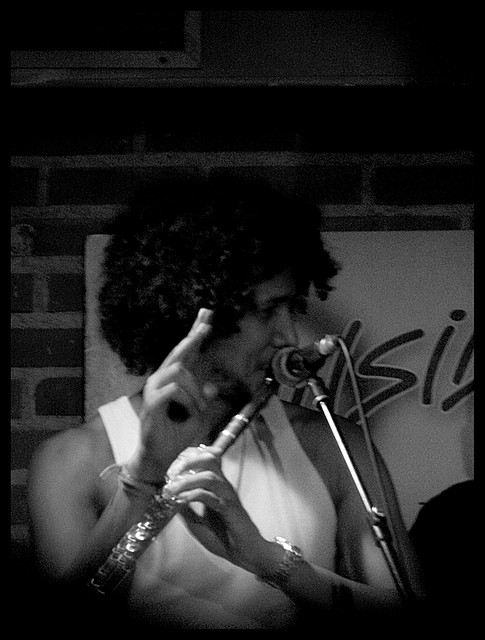
ImageMalik Mezzadri is a jazz Flautist born in 1969. He grew up in Pointe-à-Pitre, Guadeloupe where he started recorder (fipple flute) and transverse flute at the age of 6. When he was 13 he learnt flute with Marc Rovelas who made him discover Bach, Xenakis, Ravel and Stockhausen.
He left Guadeloupe at 17 and graduated from the Marseille conservatoire being the first flutist, he discovered jazz at that time.
As soon as he left the conservatoire, he got the occasion of playing in reggae band Human Spirit during 10 years.
Malik Mezzadri made multiple collaboration as a flutist with artists such as Lio, Teri Moise, Laurent Garnier, Saint Germain, Dj Gilb’R, FFF.
In 1992 he founded his first Magic Malik Orchestra which recorded its first demo released in 1997 under the name HWI Project via Salam Aleikum.
Then he met Julien Laurau who tours with his own band: the Groove Gang. In 1998 he takes part to the album City Boom Boom and joined the Groove Gang. In 1999 Malik goes on tour with the Groove Gang during several months across South America and Africa.
In 2000 he decides to start an album on his name and gathers  a new Magic Malik Orchestra. It leaded to the recording of the album 69 96 via Label Bleu:
............................................
This music integrates so many influences seamlessly into one concept - North African, West African, bop, free jazz, classical, electronica and even Latin vamps. It's hard to see how all this should work together but Malik makes it work. In fact, it seems this IS Malik and therefore it works.
The arrangements are at times brilliant: just take the three bar Latin vamp (4/4-4/4-7/4) of Voleo that in and of itself would be great but serves as basis for Miles' Oleo which is played in 4/4 and therefore keeps on shifting on the vamp. Awesome effect: the repeats of the Oleo excerpt never sound quite the same and get completely integrated into the vamp. Very smart!
Malik's flute playing is fantastic! It's rare to hear a flute player in jazz who's actually good, but Malik is beyond good. He improvises with abandon, using angular altered lines (people like Rosenwinkl would be proud), free flurries, impeccable rhythm in any context (bop, rock/electronica, African, Latin...) and quite an edgy arsenal of classical quotes (a Bach phrase here and there, sometimes modulated to great effect). His tone on the flute is full and brilliant, unlike that of so many jazz flutists who are actually sax players and double up on the flute, usually to very little effect.... The spectacular singing technique is a show stopper.
The "orchestra" is great as well. There is an absolutely beautiful keyboard solo on one of these tunes (don't remember which at the moment), melodic and heart-wrenching. The grooves are super tight, drumming and percussion are standout (albeit the drumming at times gets a bit overpowering), the sax plays some great solos...
Most of the music is pretty high-powered and extroverted. There are a few moments of introspection (like the gorgeous low register flute playing at the outset of Pandemonium), but more of this to contrast the general high-decibel and upper register playing and arrangements would have made the disc even more subtle and beautiful.
Still, a must have
an amazon review

I can only agree with the above
a must listen indeed


November 15, 2012

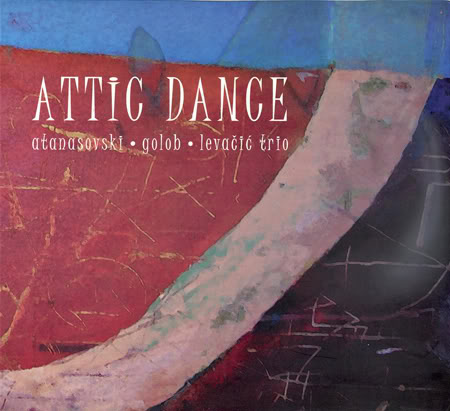
Atanasovski, Golob, Levačić trio - Attic Dance

Vasko Atanasovski - soprano, alto & baritone saxophone, flute, bansuri 
Ziga Golob - bass
 Krunoslav Levačić - drums


to
 say 
thegoodone

November 6, 2012

Pibo Marquez & Descarga Criolla 2 -Te Pones a Bailar

first big apologies from all the present team 
that's me and kokolo-and I know that Miguel is always with us,even seemingly absent-
for not updating this nice little spot more often as we certainly should 
it is life's different courses and needs that sometimes oblige us to withdraw from some activities  
and toil in others,as for me after completing a first  circle in my new blog 
I can promise you a  little winter/summer -sensual and spicy party from this spot 
hot and at least more frequent than in the previous months 
let's make a new start


Percussionist, composer, arranger, and band leader Joel “Pibo” Marquez
was born in Caracas June 22, 1966. 
At an early age, he began exploring music with the support of his family.
He began his musical studies of the cuatro, and other string instruments in Venezuelan roots music,
and began participating in different folklore groups at just 8 years of age. 
He continued his formation at the popular school Cristo Rey, in the district 23 de Enero, 
at Caracas where he refined his skill and education of Latin American percussion and its origins.
 His studies soon extended to other countries in Latin America,

 Cuba, Puerto Rico, Ecuador, Colombia, Peru and Surinam,
 having the support of an important cultural organization in Venezuela.
 In 1980, he had the opportunity to put into practice what he learned from these experiences,
 linking them with different groups of Venezuelan folklore through 1984,
when Grupo Madera summoned him.
 This group of international recognition helped him to show his excellent musical capacity 
and his extensive knowledge of the percussion.


After separating from this group, Marquez began to explore other musical styles like salsa,
 Latin jazz as well as contemporary music for ballet and theater.
 He then moved to Colombia, where he resided for six years.
 There, in 1998, he was hired as a sideman for Alfredo de la Fe's orchestra.
 Soon afterwards, famous guitarist Carlos Santana commissioned him
 to write some songs to tour with him-a great honor for Marquez, 
who considers Santana to be one of his personal heroes. 
In the beginning of 1998, Pibo Marquez was offered the chance to produce the first recording under his name. The album bears the name Joel Pibo Marquez, Con Las Manos Calientes.....


caliente


September 5, 2012

Vasko Atanasovski - Suite de passion


Saxophonist and flutist Vasko Atanasovski is one of the most creative and versatile Slovenian composers and musicians, well known for his cross-genre collaborations with world famous jazz, rock, classical, traditional musicians and his masterful approach to all styles of music. Up to this date he has released 10 highly acclaimed albums, received numerous awards as well as earned audience and critics’ compliments for his performances and compositions home and abroad. He is a regular guest on the European festival and concert circuit and has also performed in India, China and New York. His original compositions have also found a way into the world of theatre, dance and puppet shows, repertoires of eminent soloists, orchestras, ensembles and choirs. oficial


Vasko Atanasovski - sopran & alto sax, flute; compositions
Dejan Berden - piano
Roberto Bartoli (I) - contrabass


Passion to play
thegoodone to say
from linear notes: Vasko Atanasovski (born 1977 in Maribor) is one of the few Slovenian musicians who, besides researching contemporary improvised music, Afro-American and European tradition, ethnic music from different parts of the world, succeeded to develop exceptional originality in composition and musical style. Numerous projects, in which he had been researching new 9 concepts of communication, aesthetics and creativity, are behind him. In 1990 he won the r award on the competition of young saxophonists from former Yugoslavia. When he was seventeen, he began to play gipsy music and started to take part in dance and theater projects. In 1996 he joined the legendary Quatebriga jazz ensemble. Ever since he has been devoted to his own productions as a founder of many music groups and projects (Vasko Atanasovski Quartet, Vasko Atanasovski iMPRODooM, Slavika Ensemble, Solo Akupunktura, Atanasovski-Berden-Bartoli Trio). In 2001 he published Akupunktura, a small edition solo album, and in 2002 the album Heat Flower came out at the Austrian record label Extraplatte. Suite de passion brings forth contemporary music, marked with elements of flamenco, jazz and ".ein music. The idea is rooted in existentialism: the existence is a ,,passion in both senses, as md desire. These feelings inspired the conception of Suite de passion, dynamic and passionate v among the excellent improviser Atanasovski, outstanding Italian acoustic bassist Roberto imnd all-round Slovenian pianist Dejan Berden.

August 18, 2012

Free flute


Dieter Bihlmaier Selection - The SWF-Session
Bass – Jan Jankeje 
Drums – Gerhart Ziegler 
Flute – Dieter Bihlmaier

 01. Ovation (Ziegler) 05:47
02. Roulette (Bihlmaier) 06:19
03. Echoes (Jankeje) 08:35
04. Maskerade (Bihlmaier) 04:42
05. Gertuschka (Jankeje) 05:13
06. Free and Romantic (Bihlmaier) 07:48
07. Arco Oriental (Bihlmaier) 05:03

bye bye
says this ass
my work is done
it is up to you
to pass on thegoodone


From the vaults of radio station SWF (today SWR) and previously unreleased, this fantastic group with a rather unusual instrumentation (flutes, bass, drums) blow your ears away. They played music you probably haven't heard before. Call it Free rock, living new jazz or just extremely good music, this trio is far out of any limitations. The music of the Dieter Bihlmaier Selection possesses genuine power, where explosive eruptions alternate with lyric moments. On repeated listening the music develops an irresistible pull that we wish to share with all lovers of "good music". These recordings are without any doubt not only of high musical value, they are also an absolute rarity, since unlike the two albums of the Dieter Bihlmaier Selection, they were recorded just in the trio formation flute, bass and drums and without the participation of the vibraphone player. The SWF-Recordings 1973 of Dieter Bihlmaier Selection are an outstanding musical achievement. CD comes with full coloured 12 pages booklet including band history and a lot of photos. Digitally remastered from the original master tape. If you want to listen to more...... listen to Dieter Bihlmaier Selection The SWF-Recordings 1973. 

for more info you got to grow some LONG HAIR.


August 8, 2012

warning ! fake freedomblues !


fake freedomblues (and blackstarliners and 0earth) activated.

mY blogs were removed last January along with hundreds of others as  casualties of the megaupload hunt I  presume.I had "almost" forgot about it....
the standard google/blogger policy in such cases till now was that the blog name and it's  url was not available for new blogs anymore.
to my  ultimate surprise I found out lately that all their names were given away and reactivated  by someone who is probably intending to sell blog names!
a very original  and enterprising idea that  oblidges  me to laugh sarcastically with these new age practices..Happy blog sellings then!
Anyway I had to come back to warn my fellow bloggers and friends(starting with this blog)
that still remember my old blogs to remove them permanently from their  lists and preferences.those fake blogs have nothing to do with me now or in the future.
the only freedomblues that is alive is in my heart and can't be deleted from there.

nauma

and to remember freedomblues I'm giving you the two compilations of Tanzanian musiki wa dansi bands
the older first part posted on fdb and the second  for this blog.


the more I listen (again) to these bands the more I love (again) and more deeply,this time-this music.The Tanzanian people must be very proud of it..Dance and entertainment of the highest caliber by these,in most cases "state sponsored" bands.Hope you enjoy it along.As you can imagine,I'm in the middle of a "dansi hurricane" during the last days and this resulted the coming compilation.I have included in the file four pdf's for a more compete understanding  of the era that produced this tre-tre beautiful music.there is enough material for a second round when we visit again Tanzania.NUTA Jazz and Dar es Salaam bands are not represented,since they had their portraits already,but my favorite,taarab spiced, Kiko Kids Jazz are here in full force with 5 tracks:Tanganyika na Uhuru! Kids Jazz!


trx

01-National Jazz Band-Sisi Vijana Wema
02Atomic Jazz Band-Dunia Ina Mambo
03-Kiko Kids Jazz-Sili Sishbi
04-Jamhuri Jazz Band-Shangazi Naomba Taiti
05Atomic Jazz Band-Salamu Zako Nimezipata
06-Morogoro Jazz Band-Likemba Ya Moro
07-Kiko Kids Jazz-Kiko MWanisakama
08-Kilwa Jazz Band-Vilonitendea
09-National Jazz Band-Nora
10-Kiko Kids Jazz-Kenekubalile
11-Nicky, Athmani & Hodi Boys Band - Mapenzi Tu
12-Afro 70 Band-Week End
13-Kiko Kids Jazz-Tunda Bichi
14-Atomic Jazz Band-Njoo Mpenzi Njoo
15-Mbaraka Mwishehe & Moro Jazz Band-Miziki Ya Mji Wa Morogoro
16-Afro 70 Band-Nambie Kweli
17-Western Jazz Band-Nitafurahi Ukitumwa Tena
18-Kiko Kids Jazz-Tanganyika na Uhuru Kids Jazz


Musiki wa dansi 1


unakaribishwa!  finally here comes the second,  long  announced , volume of Musiki wa dansi,the   legacy of popular dance music from the divine, I know that I'm  exaggerating a bit using this word but that's very close to (the always personal) truth (= heart)  of mostly state financed  Jazz bands of Tanzania  from the early 60's till the late 70's and by jazz  we surely mean the  local East African brass and percussion rumba variations. 
(add to them some of the sweetest guitars that ever came out of  the Tanzanian tubes)
I must say  that I'm  particularly  happy to dive again in such an effort and  compile a new mix  as  I have many years of  affection for this material. How they sound today apart from the inevitable and  certain nostalgia  that  stimulates  memories?a whole era is unfolding through these  slow burning swahili rumbas that  are still  vintage and unsurpassed to these  ears.
all real music for all real people.I'm sure you get my point ...to be continued....


01-Mbaraka Mwinshehe & The Morogoro Jazz BandSululu ya moro
02-Vijana Jazz Band-Ujirani mwema
03-Dar es Salaam Jazz BandTabu nyingi nilizonazo
04-Vijana Jazz Band-Heka-heka
05-Morogoro Jazz-Urafiki Mwisho wa mwezi
06-Nuta Jazz-Selemani
07-Atomic Jazz Band-Usijipendekeze
08-Jamhuri Jazz Band - Shingo ya upanga
09-Njohole Jazz Band - Naona Ajabu
10-Western Jazz Band - Lipa kodi ya nyumba
11-Kilwa Jazz Band - Muungano Tanzania
12-Tabora Jazz - Alhamdulillah
13-Orchestre Maquis Original - Karubandika
14-DDC Mlimani Park Orchestra-Matatizo ya uke wenza
15-Kiko Kids Jazz - Nimeona Uwa
16-Chipukizi Rumba Band - Dada mwajuma


Musiki wa dansi 2


e3njo*y

July 7, 2012

a Lourdes Van-Dunem summertime

.
...born in Luanda in 1935, Maria de Lourdes dos Santos Van-Dunem started her musical career in the 60s when she joined the "Ngola Ritmos" band along with Liceu Vieira Dias, Jose de Fontes Pereira, Amadeu Amorim and Belita Palma, the forerunners of Angolan music, who were also in the anti- colonial movement.
After producing "Ngola Ritmos", the singer made several tours in Angola as well as in Portugal before recording her first album "Monami".
She later worked with the "Jovens do Prenda" band.
During her musical career, Lourdes Van-Dunem had also performed in Brazil, South Africa, Algeria, France, Spain and Zimbabwe.
In 1996, the vocalist, who was a florist, recorded her compact disc "Ser Mulher" in Portugal.
She had also participated in the "So Why" project initiated by the International Red Cross Committee (ICRC) together with Senegalese Youssou N'dour of Senegal, Congo's Papa Wemba, Nigerian Lagbaja and Lucky Dube and Jabu Khanyile of South Africa.
This culminated into the recording of a CD, a video clip, a documentary and the publication of a book aimed at helping the victims of war and political violence.
She died in 2006 of typhoid fever. The President of Angola, Jose Eduardo dos Santos, attended her funeral.


summertime avec Monami Miguel
:)


Monami


June 21, 2012

Sekou Kouyate Experience - Dia


http://soundcloud.com/igor-leonardi

Sekou Kouyate - kora, vocals, guitar  
Igor Leonardi - guitar,guitar sinth
Damir Mazrek - percussion  
Nino de Gleria - bass  
Enos Kugler - drums
SEKOU KOUYATE is a musician from Guinea Conakry living in France, who earned himself the nickname The Jimi Hendrix of Africa and Jimi Sékou Kora with playing the 21-string African harp called kora. In his group Ba Cissoko, which is perform-ing all over the world, the kora is often supplemented by electrical effects, which usually rock guitarists use. Sekou comes from the Griot generation, a West African family of artists. Their role and mission have always been carrying on news, resolve conflicts, record history in songs and of course preserve music and dance, which are still being used to accompany rituals and ceremonies such as birth, baptism, marriage and death. In the last decades the music of Griots got a lot of attention across the world with the popularization of the 3rd world music. Characteristically for this type of music are the exceptional melodious sounds and the rhythmical motion. The pre-colonial kingdoms of West Africa were very familiar with the Arabian arts, which were then at the same time influencing the European Renaissance music with the development of string musical instruments. The kora can be retuned into the major scale or into the parallel minor scale and includes three and a half octaves. Once the kora only accompanied singing but is nowadays considered as a solo instrument on which all types of music styles can be played as well. SEKOU KOUYATE EXPERIENCE is a musical project that unites the African virtuoso with Slovenian musicians who are actively involved in playing West African music. The result of the project is an energy-packed whole created with the interplay between traditional African music and various jazz, funk rock and reggae sounds with a lot of lyricism. The songs are mostly originals with some arranged traditionals. The Group has performed all over Slovenia on festivals and in clubs in 2011.source PUBLISHING HOUSE GOGA