May 9, 2013

Nelson Sargento ~ sonho de un Sambista


...as a  piano is  not just a piano
and  water is H2O and  hundreds of rivers  and seas    
Samba is bigger than life and  thousands  of  life's stories..

an exquisite and much loved artist  -Nelson Sargento : 


Nelson Sargento is the artistic name of Nelson Mattos, born on the 25th of July, in a public hospital (Santa Casa de Misericórdia) in Rio de Janeiro. He was raised in Tijuca, in the house of Portuguese shop owners for whom his mother worked as a housemaid. On weekends his mother would take him to visit their family  on the morro (hill) of Salgueiro, a redoubt of samba, and when he was twelve they moved to the morro de Mangueira.
Nelson is the last of the old guardia of Mangueira, Rio's most storied samba school. His "As Quatro Estações do Ano" is considered to be Mangueira's most beautiful carnival samba of all time.......

Em Português


um sonho

April 11, 2013

Spice Up Your Life...

 
More or less essential spices for Mediterranean cooking...

Allspice: A single spice that imparts the warm flavor and rich aroma of cinnamon, cloves and nutmeg, allspice is also known in Mediterranean cooking as myrtle pepper. (It's a member of the myrtle family.) You'll find it whole and ground in recipes for seafood, poultry and meat marinades, as well as in rice dishes and desserts -- like cakes, pies, and puddings. It's also often used in tandem with other spices, especially on vegetables and in stews and stuffings.
  
Anise Seed: The warm, sweet, licorice-like taste of anise seed is used to flavor both sweet and savory dishes. In Mediterranean cooking you'll find it in seafood recipes, dried fruit and nut mixtures, breads (like biscotti), and desserts.

Annatto Seed: Annatto seed adds a warm, sweet, peppery flavor and a lovely orange color to grains, seafood, vegetables, meats, stews, sauces, and legumes. It's often used in combination with other spices. You'll also find it referred to as roucou, lipstick tree, bija, and achiote.

Basil: A staple in southern France and Italy, you'll find the sweet yet peppery taste of basil in a wide variety of dishes -- as the basis for pesto and often in tandem with tomatoes, in pasta sauces, Italian minestrone, salads and dressings, breads and marinades. It's an extremely versatile herb from the mint family. Basil blends well with other herbs and spices -- such as parsley, rosemary, oregano, thyme, sage, and saffron.

Bay Leaves: Bay originates in the Mediterranean area, where in ancient times it was a symbol of achievement. Potently flavored, just a leaf or two of bay will usually suffice in soups, broths, stews, sauces and marinades for meats and poultry. It's even found in an occasional dessert.

Caraway Seeds, Black: The peppery taste of black caraway (nigella seed) is enjoyed on flat breads and with lentils and vegetables and in spice blends and pickles. No relation to true caraway seeds, these are produced by a flower that belongs to the buttercup family and is indigenous to the Mediterranean. The seed has long been valued for its healing properties.

Cardamom: Mediterranean cooks crush the pods to release the warm flavor and aroma of this spicy, sharp, and sweet seasoning. Native to India and a member of the ginger family, it's used in both sweet and savory recipes -- from beverages and delicate desserts to meat and vegetable dishes.

Chervil: Chervil is used by French and Spanish cooks much like parsley, though it imparts a delicate anise taste as well as an herbal one. You'll find its distinctive, delicate flavoring in recipes for seafood, pasta, grain, vegetable and egg dishes, and in salads, sauces, soups, and dressings. A key ingredient in French potato soups, chervil also appears in blends like Fines Herbs.

Chili peppers: Red chili peppers are ground and used as a table condiment (cayenne) or made into a paste. Mediterranean cooks also sprinkle them in sauces, stews, and seafood dishes. The heat of the spice comes from the capsaicin content, which varies; all chili peppers belong to the genus capsicum, which includes over 20 different species.

Chives: Chives belong to the onion family but have a milder, more delicate flavor than onions. They are rich in vitamins A and C and complement salads and dressings, yogurt, egg, and pasta dishes, casseroles, baked potatoes, soups and sauces. Chives also appear in recipes for Fines Herbs blends.

Cilantro: A strongly aromatic seasoning found in many cuisines around the world, cilantro has roots in both Southern Europe and the Middle/Far East. The leaf of the coriander plant, it has a pungent flavor reminiscent of sage and lemon. You'll find it seasoning Mediterranean stews, soups, curries, vegetables, salads, relishes and tomato-based sauces.

Cinnamon: Fragrant with a slightly sweet taste, cinnamon adds a warm spiciness to Mediterranean soups, condiments, glazes, desserts, and drinks. It complements fruits like apricots and apples as well as meats and vegetables like carrots, spinach, and onions. Cinnamon often appears in Mediterranean cuisine in combination with other warm spices, like cloves, nutmeg, cardamom, ginger, allspice and pepper.

Cloves: The warm, rich, spicy flavor and strong, sweet aroma of cloves is used to accent Mediterranean baked goods, stews, soups, and meats. It's often used in tandem with cinnamon, ginger, and nutmeg. Of Southeast Asian origin, the spice is the unopened flower bud of the evergreen clove tree.

Coriander: With a taste and aroma that's distinct from fresh cilantro leaves (which come from the same plant), coriander is often used to flavor Mediterranean meat, poultry, and vegetable dishes as well as cookies and cakes. Its scent is a bit like orange, its taste warm and sweet.

Cumin: Cumin is a vital spice around the world. Mediterranean cooks toast the seeds whole and then grind them for use in stews and with couscous. It's often paired with coriander as well as hot spices. Good quality cumin will hold its flavor and aroma in long-simmering dishes. You'll find it in recipes for seafood, egg, poultry and meats, as well as tomato-based sauces and salad dressings.

Fennel: Mediterranean cooks often toast fennel seeds and serve them with seafood. You'll also find their sweet, mild licorice taste in meat, vegetable, and grain dishes, soups, tomato sauces, cakes, pastries, breads, beverages, salads and dressings (especially French vinaigrettes).

Fenugreek: The nutty, spicy-sweet, maple-like flavor of fenugreek is found in both Mediterranean and West Asian cuisine. It's often used -- whole or ground -- in curries, pickles, breads, teas, and desserts. Use it sparingly, because too much can make a dish bitter.

Garlic: A mainstay in Mediterranean cuisine, garlic is a versatile seasoning that complements most any savory dish. Of central Asian origin, it's a member of the lily family and comes in many varieties, including white-, pink- and purple-skinned cloves. You'll find garlic in Mediterranean sauces, stews, soups, salad dressings, casseroles, breads, and grain dishes.

Ginger: Mediterranean cooks use ginger to enhance both sweet and savory dishes. Warm and spicy sweet, aromatic and zingy, ginger is added to stir fries, sauces, cakes and cookies, puddings, and -- because it combines well with many other seasonings -- spice blends.

Juniper Berries: The fruit of a small evergreen shrub, this aromatic and spicy/sweet seasoning is used for meats (marinades, roasts, stews, and in sausage mixes), pickles, soups, and vegetable dishes. Mediterranean cooks crush the berries to fully release the flavor.

Mace: This red, lacy covering of the nutmeg fruit is used in dessert and savory dishes to impart a warm, sweet, cinnamon/pepper flavor. You'll find it in Mediterranean recipes for soups, sauces, stuffings, puddings, and baked goods.

Marjoram: A relative of oregano with a lighter, more delicate flavor, marjoram is used liberally by Italian, French, and Greek cooks. Native to the Mediterranean region, it has a sweet, minty flavor that works well with many vegetables, meats and poultry and in recipes for soups, stews, butters, sauces, and salad dressings. It's also a key ingredient in spice blends such as Fines Herbs.

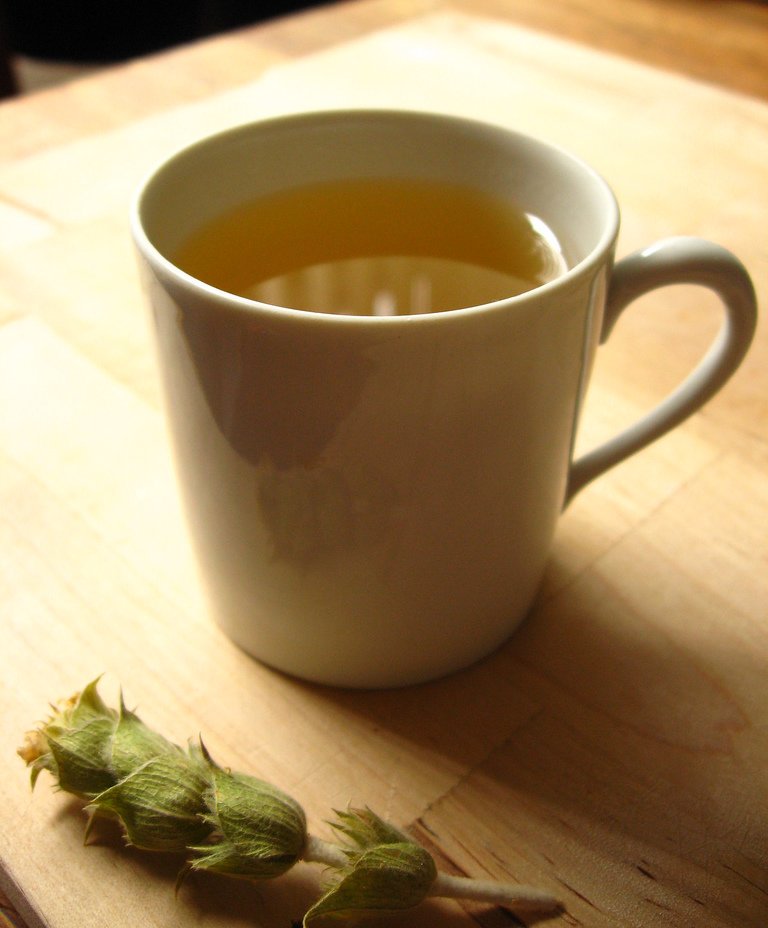
Mint: Used in eastern Mediterranean cooking, peppermint and spearmint provide a fresh flavor in a variety of sweet and savory dishes. Peppermint's strong aroma and taste is often used to flavor candy and desserts, and spearmint is often found in teas, sauces, and jellies that are served with meat, as well as vegetables, like potatoes and carrots. Mint is also added to salads, stews, soups and stuffings.

Nutmeg: Mediterranean cooks grate whole nutmeg for a strong, cinnamon/nutty flavor in sweets and savories. You'll find it in recipes for pies, cookies, cakes, fruit dishes, sauces, soups, seafood, poultry, beans, eggs, cheeses, and vegetables (especially eggplant, spinach, and cabbage). Italian cooks in particular use nutmeg for its rich scent and flavor in ravioli and tortellini dishes, meat sauces and stews.

Onion: Onion's distinct taste is indispensable in Mediterranean cuisine, where it enhances other vegetables, soups, sauces, seafood and meat dishes, grains and legumes. There are hundreds of varieties -- including the large, round Spanish onion, the red-skinned Italian onion, smaller, yellow or white onions, pearl onions and green onions --  all of which vary in appearance and potency.

Oregano: Oregano grows wild throughout the Mediterranean, where it's a cooking staple. Though related to marjoram, its flavor is stronger. You'll find it in French, Greek and Italian dishes, especially in tomato-based recipes. Mediterranean oregano is also used to marinate meats and seafood before grilling and to season olives, cheeses, vegetables (especially eggplant), egg dishes, grains, breads, casseroles, meats, poultry, and salads. It partners well with other spices, like basil, garlic, thyme, and parsley.

Paprika: This vibrantly colored spice has a mildly peppery/sweet taste that complements eggs, poultry, stews, soups, dressings, seafood, and vegetables. It can be substituted for Aleppo pepper (use three parts ground Hungarian paprika and one part ground red pepper flakes) in Mediterranean recipes.

Parsley: Native to Southern Europe, parsley is used in sauces, soups, meat marinades, dressings, salads, casseroles, stuffings, omelets, soft cheeses, and potato dishes. The two main types are curly and flat-leaf parsley, both rich in vitamins and minerals. Parsley is a key ingredient in persillade (a French mixture of garlic and parsley).

Pepper: A wide variety of peppers are used in Mediterranean cooking -- usually freshly ground. The black variety originates from unripe green berries that ferment before drying, resulting in strong flavor and aroma. White pepper originates from ripe berries soaked to remove the red skin; it has a bit less aroma and flavor and is best used in recipes requiring a milder pepper flavor and white color, such as light soups, white sauces and egg dishes.

Rosemary: A native Mediterranean spice, rosemary's aromatic, needle-like leaf has a sweet, pungent flavor. Italian cooks use it liberally in marinades and with roasted and grilled foods, like vegetables, poultry, and seafood. It also works well in stews, sauces, dressings and focaccia. You'll find rosemary in Bouquet Garni and Herbes de Provence blends, too.

Saffron: A vibrantly colored, sweetly scented, pungent-tasting spice, precious saffron comes from the stigma of a flowering crocus. Grown in Spain, it's often used to flavor bouillabaisse, egg dishes, salads and dressings, sauces, seafood, poultry, paella and other grain dishes, and breads.

Sage: A Mediterranean spice in the mint family, sage has a pungent, slightly bitter/sweet taste and an herbal fragrance. Mediterranean cooks use it to flavor a variety of foods, including meats, seafood, poultry, stuffings, soups, breads, bean salads and dressings. Italian cooks add it to pasta sauces, too.

Sea Salt: The fresh, robust taste of sea salt is found in Mediterranean breads, pickled vegetables, dressings, and with cheeses, meats and grains -- any savory dish and a few sweet ones as well. It enhances other flavors, seasons on its own, and provides a necessary nutrient.

Savory: A Mediterranean native, savory has a strong, slightly peppery flavor. Summer savory is milder and more commonly grown than winter savory and is used to flavor legumes, meats, poultry, seafood (especially trout), beans, dressings (especially vinaigrettes), soups (especially cream soups), stuffings and tomato sauces. Winter savory is used in marinades, salads, soups, sauces, dressings, stuffings, and with meats and vegetables like eggplant and cabbage.

Tarragon: A staple seasoning in French food, you'll find the sweet, fresh, licorice-like flavor of tarragon in sauces, dressings, butters, vinegars, condiments, and with meats, poultry, eggs and seafood. It's also a crucial ingredient in spice blends like Fines Herbs and Herbes de Provence.

Thyme: Native to the Mediterranean, this aromatic, pungent seasoning has an herbal, minty flavor and scent. It's used in many savory recipes and especially with tomatoes and in slow-cooked dishes like soups and sauces. Try it (with a light hand at first) with poultry, seafood, meats, and in marinades and stuffings. It's distinctive enough to stand on its own, but it's also found in classic spice blends like Bouquet Garni and Herbes de Provence.

Turmeric: Mediterranean cooks use turmeric to add a beautiful yellow color, warm, mild aroma, and gingery spice to many recipes, including egg, grain, vegetable, legume, seafood and meat dishes, as well as condiments. It's a member of the ginger family and is sometimes used for color in place of the more expensive saffron (though the taste is distinctly different).


01. Amr Diab - El Alem Alla
02. Elissa - Ramshet A'en
03. Abdul Majeed Abdullah - Raheeb
04. Nawal Al Zoghbi - Ma Bteta'ab Dakhlak
05. Kadim Al Sahir - Ha Habibi
06. Pascale Machaalani - Nour El Chams
07. George Wassouf - Erdha Bilnaseeb
08. Hisham Abbas - Wana Wana Amel Eh
09. Najwa Karam - Ya Habayeb
10. Ilham Al Madfai - Ashgar Be Shama
11. Ragheb Alama - Hamd' Ellah Al Salama
12. Abdallah Al Rowaishid -  Wainak
13. Assi Al Hillani - Ahibbak Jiddan
14. Dania - Yalla Bina


  Make love - not war
still true today
and always will be
anything else is blasphemy
 
:  )
March 13, 2013

Ottoman

Kanun: Turgut Özüfler
Keman: Hasan Nar
Ney: Başar Dikici
Tanbur: Alper Uzkur
The Ottoman Classical Palace Music

Tracks:

01.Acem Aşiran Saz Semaisi (Mısırlı İbrahim Efendi)
02.Hüseyni Peşrev (Lavtacı Andon)
03.Hüseyni Taksim (Ney Tanbur)
04.Hüseyni Saz Semaisi (Lavtacı Andon)
05.Segah Peşrevi (Yusuf Paşa)
06.Ferah Feza Taksim (Tanbur)
07.Ferah Feza Saz Semaisi (Tanburi Cemil Bey)
08.Hicaz Saz Semaisi (Refik Talat Bey)
09.Hüzzam Taksim (Kanun - Keman)
10.Neveser Taksim (Tanbur)
11.Kürdili Hicazkar Taksim (Tanbur)
12.Muhayyer Saz Semaisi (Tanburi Cemil Bey)

OTTOMAN MUSIC AND ITS INSTRUMENTS


Music occupied a very important place in Ottoman society. Topkapi Palace was a virtual conservatory, where both women and men received intensive training in music. Every concubine mastered an instrument while also being instructed in singing and dancing. Indeed, there were concubines who learned to play the trumpet, usually considered a man’s instrument. The men, on the other hand, received their musical training in the Enderun, which was the palace school. Albertus Bobovius, for example, a Pole who entered this school while still young and spent twenty years there, contributed a great deal to Turkish music. Bobovius, who in Turkey took the name Ali Ufkî Bey and was an interpreter and translator at court, transcribed 544 works of Turkish music into European notation. It is thanks to this effort that these pieces can be played today.
In order to grasp the importance which music had for the Ottomans, and the place it occupied in their culture, one must understand its three functions: Concert music, music for accompaniment, and visual impact.

Concert music, whether at the palace or elsewhere, was simply to be listened to. Among the Ottomans, concerts were performed both indoors and outdoors. A picture the original of which is in the Warsaw University Library depicts twelve Ottoman musicians giving a concert at the British Embassy on February 22, 1779. The instruments employed were three neys, a violin, a ‘kemânçe’, a ‘santur’ (the Turkish dulcimer), three tambourines, one ‘miskal’ (a multi-reeded wind instrument), and two ‘tanburs’. We have many miniatures and paintings which show female instrumentalists and concerts given among women. One such work is an 18th-century miniature now in the Philadelphia Free Library. In it, four female musicians perform for a lady in the garden of a palace or mansion, while a servant serves the lady a drink. The instruments depicted in the miniature are the tambourine, kemânçe, tanbur and ‘kanun’.

Music for accompaniment, on the other hand, was highly important for the art dances performed sometimes by women and sometimes by men dressed as women. Here music and dance were so closely intertwined that we might call such performances “visual concerts.” Music functioned as accompaniment in other types of show as well. One can cite the performances of tumblers, acrobats, jugglers, magicians, jesters and wrestlers, as well as those by trained animals. A miniature depicting festivities held in 1582 has two acrobats, two dancers and four jesters accompanied by the music of a tambourine, miskal, çagane and kopuz.

Visual impact was the third major element in Ottoman music. The costumes of the instrumentalists, and the unusual or majestic aspect of some musicians, appealed to the eye as much as to the ear. The sultan’s processions included other performances besides music. In the middle of a miniature depicting a procession of Sultan Murad III we see this ruler on horseback, while in the lower part of the work there are two dancers and a jester accompanied by a stringed instrument, and in the rear a mounted ‘mehter’ band.
Music and dance also figured prominently in the processions of tradesmen, which lasted for hours. Ottoman ambassadors who had been posted to some country, say Vienna or Paris, would enter the city with a large procession which included a sizeable mehter band on horseback. So magnificent were the scenes that the public and the courtiers watching were deeply stirred. And the ranks of those who were moved also included composers. The tradesmen’s processions inspired such greats as Mozart, Haydn and Beethoven, in whose works this Ottoman music was reflected.

The fact that music appeared in the festivities simultaneously with other types of performance did cause one problem: when different kinds of music were played at the same time, they struck the ear all together, and there was no way to make a choice. There are numerous examples of this. Consider, for instance, the miniature which shows festivities held in 1582. A ‘köçek’, that is a male dancer dressed as a woman, does his stuff for thousands of spectators to the tune of his own music. Elsewhere a Mevlevi whirls in a religiously motivated dance called the ‘sema’, again accompanied by his own music. The public can watch the köçek’s dance and the sema separately, but how are they going to keep the two different kinds of music apart. The answer is very simple: Even if the clashing types of music turned into noise, the spectators, caught up in the exuberance of the festivity, just didn’t care. On the other hand, foreigners who witnessed the festivities and wrote about them in books and reports say the cacophony of hundreds of clashing instruments, and all those songs, did indeed disturb them. The reason was that they, as strangers, were unable to surrender themselves to the festive atmosphere.

There was a wealth of instruments in Ottoman days. In his book of travels, Evliya Çelebi describes a parade of all the guilds past Sultan Murad IV, giving a full list of instrumentalists, instrument makers and singers, and points out that there were some “hundred” names for instruments. Every instrument had its own name, even when they belonged to the same family. Some of the better-known stringed instruments were the kopuz, çeng, kemânçe, violin and lute, while the winds included the horn, ney, miskal and zurna. Prominent percussion instruments were the triangle, drum and ‘çagane’. Most of the Ottoman instruments have unfortunately not come down to our age, being lost in the mists of time. One reason is that during the 19th century growing Westernization led to the use of European instruments. Indeed, such once-popular instruments as the çeng and miskal have vanished completely, not a single example being left even in the museums. But luckily we have drawings in miniatures and old books on music.

Reference: Prof. Dr. Metin And / SKYLIFE

source 

çeng and miskal ; )


YOGURT


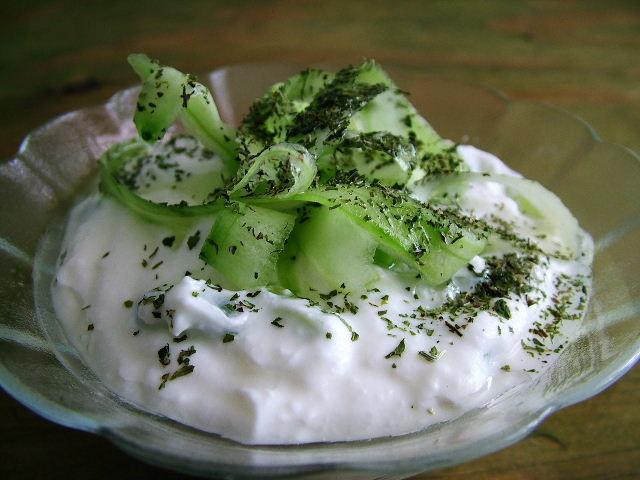
A dish that is to be accompanied by yogurt is a must on any traditional Turkish table - unless of course, there is already another dish whose main ingredient is yogurt. For thousands of years, yogurt has been an indispensable element on Turkish tables. It is consumed plain or as a side dish, and it is a crucial part of Turkish Cuisine. Yogurt is used to make soups, sweets, and the favorite drink ayran, which is made by mixing in water, mineral water and salt. Another reason why Turks hold yogurt dearly is that all over the world it is consumed and known as “yogurt,” which is a word of Turkish origin.

About a thousand years ago, Turks were the first to make Yogurt. The oldest known lexicon of the Turkish language, Kasgarli Mahmut’s Divân-i Lûgat’i Türk has an entry for the same word, and it has the same meaning. At the time, Turks still led nomadic lives and had devised numerous methods to preserve their food for their long journeys. This is one of the reasons why milk was made into yogurt. The best quality yogurt is produced through the fermentation of cow and lamb’s milk. It is not surprising that dairy products made from these animals are Turkish inventions; Central Asian Turks were the first to domesticate lambs and cows. As it was first spreading into Europe and elsewhere, this thick, white dairy product was used for therapeutic purposes; in the 20th century, its daily use spreads all around the world.

The transformation of milk into yogurt is the feat of lactic acid-yielding microorganisms. Yogurt is basically coagulated milk produced by the partial transformation of milk lactose into lactic acid through the effect of yogurt yeast. The initial production step is to boil the milk. The boiled milk is left to cool until it won’t burn your finger and then two teaspoons of starter yogurt added gently from the edge of the container. The container is then sealed and usually placed in a nest of towels to keep the milk warm and the fermentation going. Fermentation takes 4 to 5 hours at a temperature of approximately 37 degrees.

Yogurt can be classified under three groups depending on the production method; in addition to the regular yogurt whose production has been outlined above, there is also the Silivri Yogurt and strained yogurt. Silivri style yogurt is proper to the Istanbul region, and it is produced with lamb’s milk only. This is a tasty, firm and very creamy variety of yogurt. The procedure involves first boiling the milk in large cauldrons. Then the milk is poured into containers in a way to develop froth. Blazing coals are placed under these containers, and the yogurt is left to sit. Consequently, a harder and slightly cooked creamy top is obtained. When the containers are cool enough, glass syringes are used to inject yogurt yeast to the mixture from all four corners. Following this procedure, the containers are sealed with large wooden covers. After settling for 4 to 5 hours, the Silivri yogurt is then ready for consumption. The same initial procedures are followed to produce strained yogurt, however the creamy top is later removed and the remaining yogurt is placed in finely woven cloth bags. The bags are then hung at a height to allow the liquid to strain off. Finally, the strained yogurt is transferred to tin containers. Strained yogurt contains no vitamin B, since this ingredient is moved out along with the liquid as it is strained off.

It would be almost impossible to find a Turkish household that does not have yogurt in the refrigerator. Turks, who use yogurt widely, believe that it is a health food, with ability to cleanse the body from toxins and poisons. Even dreaming of yogurt is considered a good omen as a sign of upcoming wealth and a long life.
 
Reference: Yesim Gokce (Bilkent University)/Turkish Cultural Foundation

source


November 25, 2012

Chants du Pays Basque / Songs From The Basques Country La Chorale Ibaï Gorri / Lagun Arteak Vocal Group


...The origin of the Basque people remains a mystery, and according to the most eminent of linguists their language is a precious jewel which should be carefully preserved. Basques live on both sides of the Pyrenees, spread over seven provinces, divided by a political frontier and for seventy years they have as-serted the right to unity : "Zazpiak bat" (Seven in one) ... They are a people who cherish their language and their family traditions, the originality of their way of life, their dances, the different varieties of their game of pelota... The Basques have an inborn propensity for song. And they also have the desire to sing. Wherever he may be the Basques will always be singing to himself ; wherever they meet two or more Basques will soon be humming in chorus the old tunes of their native land. In their songs the Basques relate the beauty, the history and the wonderful legends of their country ; they al-so express sorrow, love, hate, joy, describe their surroundings and the state of their innermost soul. (linear notes)  
On Basque music Wiki sayes...


To poure the music into your ears, from the hart, just one word, thegoodone.

November 18, 2012

Magic Malik Orchestra 69-96

Image

ImageMalik Mezzadri is a jazz Flautist born in 1969. He grew up in Pointe-à-Pitre, Guadeloupe where he started recorder (fipple flute) and transverse flute at the age of 6. When he was 13 he learnt flute with Marc Rovelas who made him discover Bach, Xenakis, Ravel and Stockhausen.
He left Guadeloupe at 17 and graduated from the Marseille conservatoire being the first flutist, he discovered jazz at that time.
As soon as he left the conservatoire, he got the occasion of playing in reggae band Human Spirit during 10 years.
Malik Mezzadri made multiple collaboration as a flutist with artists such as Lio, Teri Moise, Laurent Garnier, Saint Germain, Dj Gilb’R, FFF.
In 1992 he founded his first Magic Malik Orchestra which recorded its first demo released in 1997 under the name HWI Project via Salam Aleikum.
Then he met Julien Laurau who tours with his own band: the Groove Gang. In 1998 he takes part to the album City Boom Boom and joined the Groove Gang. In 1999 Malik goes on tour with the Groove Gang during several months across South America and Africa.
In 2000 he decides to start an album on his name and gathers  a new Magic Malik Orchestra. It leaded to the recording of the album 69 96 via Label Bleu:
............................................
This music integrates so many influences seamlessly into one concept - North African, West African, bop, free jazz, classical, electronica and even Latin vamps. It's hard to see how all this should work together but Malik makes it work. In fact, it seems this IS Malik and therefore it works.
The arrangements are at times brilliant: just take the three bar Latin vamp (4/4-4/4-7/4) of Voleo that in and of itself would be great but serves as basis for Miles' Oleo which is played in 4/4 and therefore keeps on shifting on the vamp. Awesome effect: the repeats of the Oleo excerpt never sound quite the same and get completely integrated into the vamp. Very smart!
Malik's flute playing is fantastic! It's rare to hear a flute player in jazz who's actually good, but Malik is beyond good. He improvises with abandon, using angular altered lines (people like Rosenwinkl would be proud), free flurries, impeccable rhythm in any context (bop, rock/electronica, African, Latin...) and quite an edgy arsenal of classical quotes (a Bach phrase here and there, sometimes modulated to great effect). His tone on the flute is full and brilliant, unlike that of so many jazz flutists who are actually sax players and double up on the flute, usually to very little effect.... The spectacular singing technique is a show stopper.
The "orchestra" is great as well. There is an absolutely beautiful keyboard solo on one of these tunes (don't remember which at the moment), melodic and heart-wrenching. The grooves are super tight, drumming and percussion are standout (albeit the drumming at times gets a bit overpowering), the sax plays some great solos...
Most of the music is pretty high-powered and extroverted. There are a few moments of introspection (like the gorgeous low register flute playing at the outset of Pandemonium), but more of this to contrast the general high-decibel and upper register playing and arrangements would have made the disc even more subtle and beautiful.
Still, a must have
an amazon review

I can only agree with the above
a must listen indeed


November 15, 2012

Atanasovski, Golob, Levačić trio - Attic Dance

Vasko Atanasovski - soprano, alto & baritone saxophone, flute, bansuri 
Ziga Golob - bass
 Krunoslav Levačić - drums


to
 say 
thegoodone

November 6, 2012

Pibo Marquez & Descarga Criolla 2 -Te Pones a Bailar

first big apologies from all the present team 
that's me and kokolo-and I know that Miguel is always with us,even seemingly absent-
for not updating this nice little spot more often as we certainly should 
it is life's different courses and needs that sometimes oblige us to withdraw from some activities  
and toil in others,as for me after completing a first  circle in my new blog 
I can promise you a  little winter/summer -sensual and spicy party from this spot 
hot and at least more frequent than in the previous months 
let's make a new start


Percussionist, composer, arranger, and band leader Joel “Pibo” Marquez
was born in Caracas June 22, 1966. 
At an early age, he began exploring music with the support of his family.
He began his musical studies of the cuatro, and other string instruments in Venezuelan roots music,
and began participating in different folklore groups at just 8 years of age. 
He continued his formation at the popular school Cristo Rey, in the district 23 de Enero, 
at Caracas where he refined his skill and education of Latin American percussion and its origins.
 His studies soon extended to other countries in Latin America,

 Cuba, Puerto Rico, Ecuador, Colombia, Peru and Surinam,
 having the support of an important cultural organization in Venezuela.
 In 1980, he had the opportunity to put into practice what he learned from these experiences,
 linking them with different groups of Venezuelan folklore through 1984,
when Grupo Madera summoned him.
 This group of international recognition helped him to show his excellent musical capacity 
and his extensive knowledge of the percussion.


After separating from this group, Marquez began to explore other musical styles like salsa,
 Latin jazz as well as contemporary music for ballet and theater.
 He then moved to Colombia, where he resided for six years.
 There, in 1998, he was hired as a sideman for Alfredo de la Fe's orchestra.
 Soon afterwards, famous guitarist Carlos Santana commissioned him
 to write some songs to tour with him-a great honor for Marquez, 
who considers Santana to be one of his personal heroes. 
In the beginning of 1998, Pibo Marquez was offered the chance to produce the first recording under his name. The album bears the name Joel Pibo Marquez, Con Las Manos Calientes.....


caliente


September 5, 2012

Vasko Atanasovski - Suite de passion


Saxophonist and flutist Vasko Atanasovski is one of the most creative and versatile Slovenian composers and musicians, well known for his cross-genre collaborations with world famous jazz, rock, classical, traditional musicians and his masterful approach to all styles of music. Up to this date he has released 10 highly acclaimed albums, received numerous awards as well as earned audience and critics’ compliments for his performances and compositions home and abroad. He is a regular guest on the European festival and concert circuit and has also performed in India, China and New York. His original compositions have also found a way into the world of theatre, dance and puppet shows, repertoires of eminent soloists, orchestras, ensembles and choirs. oficial


Vasko Atanasovski - sopran & alto sax, flute; compositions
Dejan Berden - piano
Roberto Bartoli (I) - contrabass


Passion to play
thegoodone to say
from linear notes: Vasko Atanasovski (born 1977 in Maribor) is one of the few Slovenian musicians who, besides researching contemporary improvised music, Afro-American and European tradition, ethnic music from different parts of the world, succeeded to develop exceptional originality in composition and musical style. Numerous projects, in which he had been researching new 9 concepts of communication, aesthetics and creativity, are behind him. In 1990 he won the r award on the competition of young saxophonists from former Yugoslavia. When he was seventeen, he began to play gipsy music and started to take part in dance and theater projects. In 1996 he joined the legendary Quatebriga jazz ensemble. Ever since he has been devoted to his own productions as a founder of many music groups and projects (Vasko Atanasovski Quartet, Vasko Atanasovski iMPRODooM, Slavika Ensemble, Solo Akupunktura, Atanasovski-Berden-Bartoli Trio). In 2001 he published Akupunktura, a small edition solo album, and in 2002 the album Heat Flower came out at the Austrian record label Extraplatte. Suite de passion brings forth contemporary music, marked with elements of flamenco, jazz and ".ein music. The idea is rooted in existentialism: the existence is a ,,passion in both senses, as md desire. These feelings inspired the conception of Suite de passion, dynamic and passionate v among the excellent improviser Atanasovski, outstanding Italian acoustic bassist Roberto imnd all-round Slovenian pianist Dejan Berden.

August 18, 2012

Free flute


Dieter Bihlmaier Selection - The SWF-Session
Bass – Jan Jankeje 
Drums – Gerhart Ziegler 
Flute – Dieter Bihlmaier

 01. Ovation (Ziegler) 05:47
02. Roulette (Bihlmaier) 06:19
03. Echoes (Jankeje) 08:35
04. Maskerade (Bihlmaier) 04:42
05. Gertuschka (Jankeje) 05:13
06. Free and Romantic (Bihlmaier) 07:48
07. Arco Oriental (Bihlmaier) 05:03

bye bye
says this ass
my work is done
it is up to you
to pass on thegoodone


From the vaults of radio station SWF (today SWR) and previously unreleased, this fantastic group with a rather unusual instrumentation (flutes, bass, drums) blow your ears away. They played music you probably haven't heard before. Call it Free rock, living new jazz or just extremely good music, this trio is far out of any limitations. The music of the Dieter Bihlmaier Selection possesses genuine power, where explosive eruptions alternate with lyric moments. On repeated listening the music develops an irresistible pull that we wish to share with all lovers of "good music". These recordings are without any doubt not only of high musical value, they are also an absolute rarity, since unlike the two albums of the Dieter Bihlmaier Selection, they were recorded just in the trio formation flute, bass and drums and without the participation of the vibraphone player. The SWF-Recordings 1973 of Dieter Bihlmaier Selection are an outstanding musical achievement. CD comes with full coloured 12 pages booklet including band history and a lot of photos. Digitally remastered from the original master tape. If you want to listen to more...... listen to Dieter Bihlmaier Selection The SWF-Recordings 1973. 

for more info you got to grow some LONG HAIR.